A little spoken-word history, a little poetic irony, and a mild case of MissConniption
Kansas City has always been a city with something to say. You have five minutes. Better make it count.
From the smoky jazz clubs of 18th & Vine to the underground poetry slams, open mics, and hip-hop happenings scattered across the city, KC has a long and colorful history of people getting onstage and making beautiful noise.
Hey, it’s an open mic. You take your chances.
But there’s something magical about a room full of strangers willing to listen to someone bare their soul, spit some bars, or read a poem they scribbled on a cocktail napkin five minutes earlier.
I’ve spent a good portion of my adult life creating those kinds of spaces. And as I prepare to pack up my Kansas City life and head back to California, I’ve been thinking about the history of our spoken-word community, the people who helped build it, and what it actually means to keep a microphone open and ‘Read the Room’
Because, as it turns out, sometimes the underground has a guest list.
Before the Mic Was Open, the Jazz Was Jumpin’
Kansas City has been improvising for a century. Back in the 1920s, ’30s, and ’40s, the 18th & Vine district was a hotbed of jazz, blues, and creative expression. Count Basie, Charlie Parker, and generations of musicians helped develop a culture built around rhythm, improvisation, and call-and-response.
Long before somebody yelled “SPEAK POET!” from the back of a bar, Kansas City understood that art was a conversation. Fast-forward through the Beat movement, the Black Arts Movement, the birth of hip-hop, and the emergence of competitive poetry slams, and you can begin to see how the modern spoken-word scene took shape.
Poetry wasn’t just something you read quietly while contemplating your existence over herbal tea. It was something you performed. Something you felt. Something you occasionally shouted into a microphone while a stranger in the audience yelled, “REWIND!”
1997: Verbal Attack and the Modern Poetry Movement
One of the defining moments in Kansas City’s modern spoken-word history came in 1997, when Glenn North, Marcus Brown, and Jay Hawkins launched Verbal Attack at Club Mardi Gras. The Black Poets Collective, Urban Literation, and other groups helped establish a vibrant performance-poetry community that brought together writers, musicians, activists, and audiences.
By 2001, Danny’s Big Easy was hosting weekly spoken-word nights. In 2003, Glenn North and Adrie Taylor helped develop the youth poetry programming that would lead to the American Jazz Museum’s Jazz Poetry Jams. Kansas City was finding its spoken-word voice. And that voice had rhythm, soul, attitude, and occasionally some extremely questionable rhymes. Which, frankly, is part of the charm.
2006–2007: Poetry Slurrrr Gets Sloppy in Lawrence
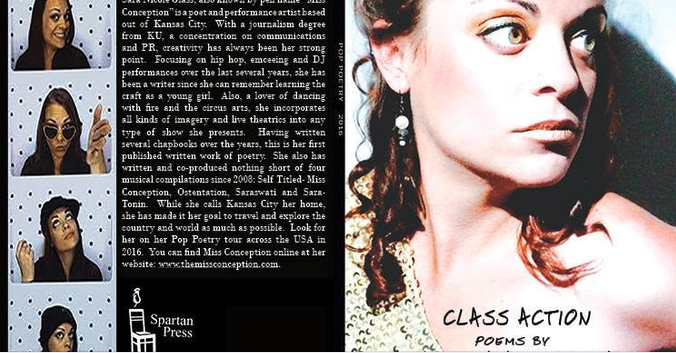
Meanwhile, over in Lawrence, Kansas, a young poet named Sara Nicole Glass — better known onstage as MissConception — was doing what she does best.
Stirring things up.
In 2006–2007, Sara founded Poetry Slurrrr at the Jazzhaus, bringing spoken word into a lively music venue where poetry could mingle with nightlife, improvisation, and whatever else happened after the second cocktail.
The philosophy was simple: Poetry belongs to everybody. You didn’t need an MFA, a publishing contract, or a dramatic scarf collection. You just needed something to say.
2012: The Birth of Poetic Underground
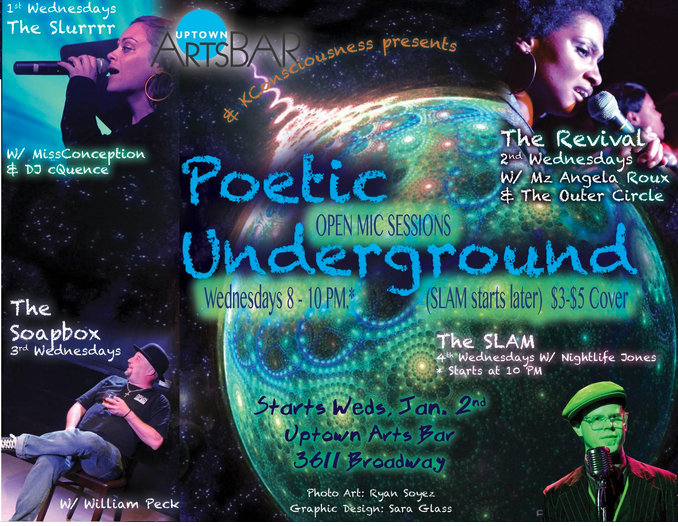
Here’s where our little history lesson gets personal. In the fall of 2012, Greg Patterson, who owned the building housing The Uptown Arts Bar, called Sara Nicole Glass with an idea. He wanted to bring more performance artists into that part of Kansas City. Would she be interested in starting a poetry open mic? Well, you don’t have to ask MissConception twice to get behind a microphone.
Sara reached out to Angela Roux, Doug E Fresh, Michael Rez Tommer, and Jeanette Powers (now Nettie Zan), assembling the original organizing group. Together, they brainstormed a name. Poetic Underground. And just like that, another Kansas City poetry community was born.
Sara was the original founder, and the name and early vision were developed collaboratively with the group she brought together. The idea was to create a welcoming space for poets, musicians, storytellers, and creative weirdos of every variety. A place where seasoned performers and first-timers could share the same stage. A place where people could experiment, connect, collaborate, and occasionally embarrass themselves in front of an appreciative audience. You know. Art.
From Underground to Institution
Poetic Underground grew. The room filled with poets. The audience developed its own vocabulary. There were slams, workshops, collaborations, friendships, publications, and enough metaphors to make Shakespeare request a smoke break. Jeanette Powers helped develop creative projects like the Prompts! anthology in 2016 and the Pop Poetry chapbook printing series that helped support authors getting their work out in print with Prospero’s Bookstore.
Later organizers, including Jenn Harris and Samantha Slupski, carried the community forward. Other spoken-word platforms emerged, including One Mic Stand KC in 2017. And when Uptown Arts Bar closed in 2019, Poetic Underground continued.
That’s the beautiful thing about building a creative community. If you do it right, it becomes bigger than you. It grows legs. It finds new homes. It develops new leadership. Sometimes it even develops a personality of its own. And sometimes that personality gets a little… particular.
The Curious Case of the Not-Quite-Open Mic
Over the past two years, I’ve stopped by a few Poetic Underground open mics, hoping to reconnect with the community I helped create. I was met with some rather interesting responses.
“Sorry, the list is full.” Fair enough. Open mics have time limits. Even poets have to go home eventually. On another occasion: “Nope, tonight is only for BIPOC poets.”
Now, I absolutely support creating dedicated spaces for Black, Indigenous, and other poets of color. Kansas City’s spoken-word history owes an enormous debt to Black artists and organizers, and those voices deserve to be celebrated and amplified. But I also believe there’s room to ask how an organization communicates its programming and welcomes the broader community. Because showing up to what you thought was an open mic and discovering that you aren’t eligible to perform can be a perplexing to say the least. Especially when you’re one of the people who started the thing. (I really don’t like to pull the “do you know who I am”? card).
It’s a bit like building a community garden, coming back years later with a watering can, and being told you’re not on the approved list of gardeners. I’m not suggesting every event must have an unrestricted sign-up sheet. Curated showcases, affinity spaces, and themed nights all have their place. But clarity, hospitality, and a little historical perspective go a long way.
And if we’re talking about inclusion, perhaps it’s worth remembering that inclusion is not just about who gets celebrated. It’s also about how we treat people when we tell them no.
A Spooky Little Plot Twist
Which brings us to October. As I prepare to leave Kansas City and move back to California at the beginning of Novemeber, I thought it would be fun to apply for Poetic Underground’s Spooky Showcase. I mean, come on. MissConception? Halloween? Spooky poetry? This practically writes itself. I’ve got plenty of fun, weird, witchy, ridiculous poems that would be perfect for the occasion. And what a lovely full-circle moment it could have been: one last performance with a community I helped launch before heading west. A little poetry. A little nostalgia. A little spooky silliness.
So, I applied. And, I was denied. Well, boo.
And not the fun Halloween kind. Of course, a curated showcase can’t include everyone, and I don’t know all the considerations that went into the selection process. Still, the irony was difficult to ignore. Apparently, even the ghosts of open mics past don’t automatically make the guest list.
A Heart of Glass and a Whole Lot of History
There’s another perspective on the complicated relationships that develop within creative communities in Nick’s blog, Heart of Glass. And that’s one reason I think it’s important to talk about our artistic history. Not just the polished version. Not just the anniversary posts and promotional flyers. But the human version.
The friendships. The collaborations. The disagreements. The people who started things, the people who sustained them, and the people who came along later and made them their own. Grassroots arts communities are messy. They’re made of artists, after all. People with big feelings, big ideas, fragile egos, enormous hearts, and sometimes a tendency to turn a scheduling conflict into a three-act tragedy. I say that with love. And professional experience.
Who Gets to Write the History?
One of the strangest things about community arts is how quickly origin stories can get lost.
People move. Venues close. Leadership changes. Websites disappear. Social media becomes the unofficial historical archive, which is terrifying because half of us can’t even remember our passwords. Suddenly, the people who founded something are footnotes, and the people currently running it become the entire story. But history doesn’t work that way.
Glenn North, Marcus Brown, and Jay Hawkins deserve recognition for Verbal Attack.
The Black Poets Collective and Urban Literation deserve recognition for their contributions.
The organizers of Danny’s Big Easy, Jazz Poetry Jams, One Mic Stand, and countless other gatherings deserve recognition.
And perhaps, I, Sara Nicole Glass deserve recognition as the original founder of Poetic Underground, alongside the original collaborators who helped shape it.
So do the people who kept it going after the founding group moved on.
Giving credit to the founders doesn’t take anything away from the people who came later.
There’s plenty of applause to go around.
So, What Does It Mean to Be Underground?
To me, the underground has never been about exclusivity. It’s about possibility. It’s about the weirdos, the outsiders, the first-timers, the truth-tellers, the hip-hop heads, the jazz cats, the slam poets, and the people who don’t fit neatly into any artistic category. It’s about creating a place where someone can walk into a room with a notebook and walk out feeling like they belong to something. That was the spirit behind Poetry Slurrrr. That was the spirit behind the founding of Poetic Underground. And it’s the spirit I hope continues to guide Kansas City’s spoken-word community long after I’ve headed west.
I’m proud of what we created. I’m grateful to the people who helped build it. I’m glad it survived, evolved, and continued providing opportunities for poets. And yes, I find it hilariously ironic that I haven’t managed to get back behind the microphone at the open mic I founded. But perhaps that’s just the universe handing MissConniption another poem. And believe me, darling, I’ve got a few.
The real legacy of a poetry community isn’t its logo, its leadership, or its sign-up sheet. It’s the people who found their voices there. So keep writing, Kansas City. Keep creating. Keep making room for the next generation (even when they don’t believe you that you are the person that founded their event).
And when somebody shows up with something different, maybe leave a little space for the unexpected. After all, you never know who might be standing at the door. It could be the next great poet laureate. It could be an old friend. It could even be a great misconception.
SPEAK POET!
With love, mischief, and just enough poetic indignation to keep things interesting,
MissConniption
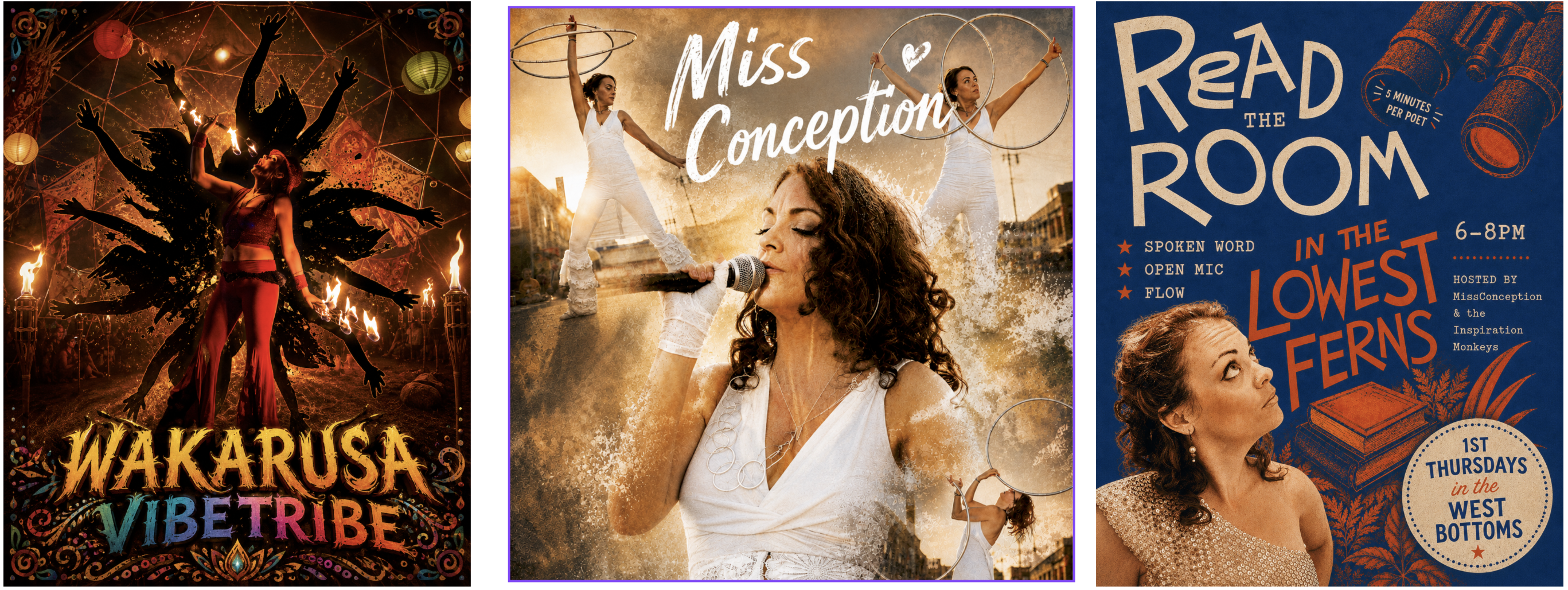
Shout out and big thanks to ‘In the Lowest Ferns‘ venue, DJ E and Mark Hamblin’s Spirit Lifters for hosting the inclusive Read the Room Open Mic the last several months in the West Bottoms.
“Do you even flow bro?” Welcome to spin city. The Kansas City flow arts scene did not appear out of nowhere. We inherited it. Every burn scar, every drum circle, every renegade, every hoop jam, every weird warehouse show, every LED toy, every busking spot, every late-night parking lot spin renegade—is possible because of a whole lot of people who built this community before we even knew it meant to run saftey.
And a lot of us did it FOR YEARS broke. And sober. While raising children. Weathering breakups in peresonal and professional relationships. Even when the city treated us like freaks, and we were asked not to spin, or banned from venues!.
We flow, because somebody else made it possible to spin out in public in the first place. I remember when the Bottleneeck and Liberty Hall started banning hula hoops because we all were beginners and back then hoops would go flying hitting people, taking out eyes left and right. It wasn’t a good look, and I avoided it for YEARS. Until Ina Moon finally forced a hula hoop into my hand and said “you will master this”. That’s when I started taking it seriously.
Let’s go WAY back
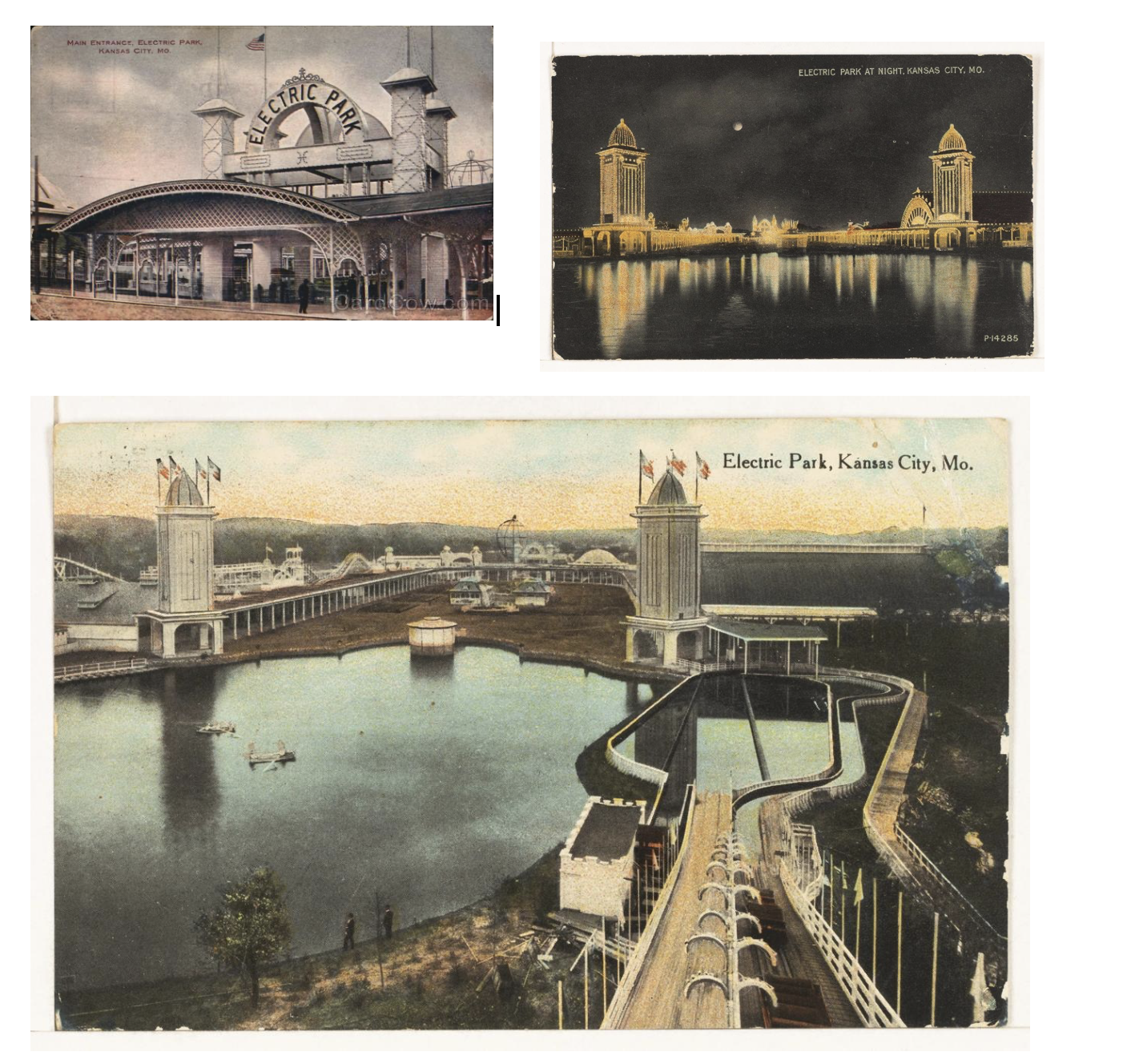
Electric Park is one of the most fascinating—and influential—pieces of Kansas City history. Long before Worlds of Fun, there was Electric Park: a dazzling amusement park covered in thousands of electric lights that helped define entertainment in the city and later inspired a young Walt Disney.
The First Electric Park (1899–1906)
The story begins with the Heim brothers, owners of the massive Heim Brewery in Kansas City’s East Bottoms. To attract people to their brewery and streetcar line, they built an amusement park adjacent to the brewery. Visitors could ride the trolley to the park, enjoy attractions, and even drink beer piped directly from the brewery. It quickly became one of the nation’s earliest successful amusement parks. The park featured rides, gardens, fountains, theaters, and one of its most famous attractions, the Mystic Chute water ride. Electric lighting was still a novelty at the time, and the illuminated park became a regional sensation.
In 1907 the Heim brothers opened a much larger Electric Park at 46th Street and The Paseo. The new park covered nearly 30 acres and was served by multiple streetcar lines. Opening day attracted an astonishing 53,000 visitors.
The new park featured:
Roller Coasters
Swimming beaches and water slides
Vaudeville acts
Dance halls
Concerts
Boat rides
Gardens designed by famed landscape architect George Kessler
An alligator farm
Massive illuminated fountains and promenades
Most famously, the park glowed with approximately 100,000 electric light bulbs, earning it the nickname “Kansas City’s Coney Island.” (By 1911 it was drawing around one million visitors annually.)
When Prohibition arrived nationally in 1920 through the 18th Amendment, the Heim Brewery lost its primary source of revenue. The brewery attempted to survive by producing near beer and other products, but it was never as profitable. This weakened the financial foundation that had helped support Electric Park and other brewery-related enterprises.
That said, Prohibition did not directly close Electric Park. The larger and more famous Electric Park at 46th and The Paseo continued operating throughout the early Prohibition years. The final blow came in May 1925, when a massive fire destroyed much of the park. Faced with rebuilding costs, a changing entertainment landscape, increasing automobile travel, and the financial challenges that had accumulated during the Prohibition era, the owners chose not to rebuild. Some think that the fire was started intentionally to get the insurance money.
The Walt Disney Connection
One reason Electric Park remains so important is its influence on Walt Disney. Before he became one of the most famous entertainment pioneers in the world, Walt Disney spent several formative years in Kansas City. Disney moved to Kansas City as a child in 1911 and visited Electric Park frequently. Years later he cited its beauty, cleanliness, landscaping, fireworks, train, and immersive atmosphere as major inspirations for Disneyland. Many historians consider Electric Park one of the conceptual ancestors of modern theme parks.
From 1921–1923, Disney operated the Laugh-O-Gram Studio out of a 31st and Troost Building, where he experimented with animation, created short fairy-tale cartoons, and worked alongside future animation legends such as Ub Iwerks. Although the studio eventually went bankrupt, Disney developed many of the storytelling and animation techniques that would later shape the Disney empire. Kansas City is also closely tied to Disney lore because he later said that a tame mouse at his Laugh-O-Gram office helped inspire the character who became Mickey Mouse. Today, the historic Laugh-O-Gram building is being restored as a museum and creative center celebrating Disney’s Kansas City roots.
Pre “Flow“
Before there were curated Instagram flow retreats and sponsored LED props, Kansas City already had an underground movement culture. The roots stretched through:
City Market Performance artists
Renaissance Festival camps
African drum traditions
Belly dance circles
Punk houses (Lawrence, KS, Outhouse!)
Industrial performance art
Burning Man culture
Circus communities
City Market Street Performers
Kansas City’s tradition of public performance can be traced back to its historic streetcar era, when the River Market served as the city’s original commercial and cultural center. The first streetcar line began in City Market in 1870, connecting downtown to surrounding neighborhoods and helping shape the city’s growth. In the decades that followed, the River Market evolved from a transportation hub into a gathering place for musicians, festivals, street performers, and public celebrations. The modern revival of public performance accelerated with downtown revitalization efforts in the 2000s and the launch of the free KC Streetcar in 2016, which reconnected the River Market, Downtown, and Crossroads districts. Programs like Art in the Loop expanded this vision by transforming streetcar stops, parks, and public spaces into stages for poets, dancers, musicians, and multidisciplinary performance artists. Today, the KC Streetcar corridor functions as a moving arts district where civic space, public transit, and creative expression converge, continuing a tradition that began more than 150 years ago.
The modern flow arts movement in America emerged from a unique convergence of juggling culture, circus arts, martial arts, dance, rave culture, and festival communities during the late 1980s and 1990s. While many flow props have ancient roots—such as poi from the Māori people of New Zealand and staff spinning traditions found throughout Asia—the contemporary American flow arts scene began taking shape through juggling festivals, drum circles, and experimental performance communities. The movement accelerated dramatically through events such as Burning Man, regional burner gatherings, Rainbow Gatherings, and music festivals, where artists began blending object manipulation, dance, meditation, fire performance, and self-expression into a distinct art form. By the 2000s, hoop dance, poi spinning, staff manipulation, contact juggling, and fire arts had become staples of festival culture, supported by organizations such as Flow Arts Institute and a growing network of teachers, gatherings, and online communities.
3rd Degree Burn – Vesuvius Lit the Match
3rd Degree Burn formed in 2003 and was the first fire group in Kansas City that predated Vesuvius in 2005. They performed and practiced at a lot at the River Market and riverside spaces. Getting the majority of gigs in the fetish community, they also performed at concert preparties, Indoor Football superbowl half time shows, Arenacross halftime shows in Kemper Arena, West Bottoms haunted houses, and more. 3rd Degree Burn was also the first fire group from Missouri to spin during the preburn at Burning Man 2004. As Agni Tara’s fire performing was rooted in primal drumming, and they soon connected to the 7 piece West African drumming group Djembe Kaan. In 2004, Agni Tara became the first Fire Goddess and served for 13 years at Interfuse, a regional burning man event in which Zay, Chase, Booser and a few other cats decided needed to happpen once they discovered the burer magic. (Thanks guys!).
In 2005 feeling creatively stunted, Agni Tara went on to form a new group of like minded members, Vesuvius Tribe consisted of 5 original members and 2 safeties, Over the course of 5 years, 40+ performers and safeties have joined the tribe and contributed to paving the pathway for fire arts in Kansas City. alented beginning blended choreography, theatrical storytelling, ritual aesthetics, drumming culture, and raw spectacle at a time when most people had never seen organized fire arts outside of Renaissance Festivals or underground gatherings.
By 2006 and 2007, Vesuvius was producing large*scale public performances across the region including a fullu choreographed 30-minute Alice in Wonderland fire show inside Union Station for Priest of Pallas 2006 complete with a flaming tea party. Quixotic just forming opened the show and Vesuvius Tribe performing alongside Lucent Dossier closed out the evening.
Performing at local art events like Chalk and Walk, Artopia, Fringe Fest 2005, EDM, and Burning Man events, they eventually introduced the city and held the reins to Waterfire performances. Vesuvius became a bridge between underground fire circles and multidisciplinary performance art, helping lay the groundwork for the KC flow arts, busker, and performance communities that followed. 2007 Vesuvius Tribe was performing LED and fire on stage for String Cheese at Big Summer Classic at Camp Zoe in 2007. The connection made at this event led to moving into more LED and busker events. Being one of the first groups to perform at Rothbury Music Festival, which later changed its name to Electric Forrest, meant they had to get creative since no fire was allowed in the forest. They came up with 7 non-fire different acts. Being called back the following year, the El-Wire stick figures running rampant at midnight to 2:00 am was a hot ticket! Rothbury was their biggest paid gig at $10,000, but split between 20+ performers, gas, and costumes. What they really gained was experience and a whole lot of fun.
They also performed with Quixotic at Priests of Pallas 2006. It was their first year and Quixotic opened with a peaceful contemporary dance. They did Alice and Wonderland with fire, and Lucent Dossier closed the night with an epic perormance. After that, Quixotic got some corporate money and basically started emulating Lucent Dossier shows, which took off. They all performed at the Beaumont Club on Funksgiving with the VibeTribe in 2015, and when an inexpireneced Q fire performer set the stage on fire, Vesuvius had to extinguish the flame because they had no safety equipment. The irony is palpable.
Vesuvius Lit the Match
If you want to understand modern Kansas City fire culture, you can turn next to Vesuvius. Not because they were the only ones spinning fire—but because they helped turn scattered curiosity into an organized community. They performed at Ren Fest, underground gatherings, Camp Gaea ritual shows, and alternative arts events when fire performance still scared the hell out of most people. There were no safe, polished community spaces then. There were parking lots. Vacant spaces. Word-of-mouth gatherings. Sketchy fuel cans. And trust. You got to learn when you showed up because elders shared knowledge directly.
KC Drum Tribe and Affiliates
According to aerialist and educator Rachel McMeachin, elements of Kansas City’s modern flow arts community can be traced back to the late 1990s. After producing a performance by the industrial performance group Crash Worship in 1996 and later touring with the group, McMeachin began experimenting with poi and fire props around 1997. During this period, artists and performers regularly gathered at a warehouse called Infinite Sun near 18th and Oak for drum circles, dance parties, and fire spinning. These gatherings served as an early precursor to the flow jams and community practice sessions that would later become common throughout the region.
The scene intersected with Kansas City’s experimental arts community. Groups such as Seemen, an offshoot of Survival Research Laboratories, brought interactive kinetic fire sculptures to local warehouse events. Another collective, the B-Team, combined glass art and performance by pouring molten glass onto the ground while performers tap danced across its surface. These collaborations brought together musicians, visual artists, fire performers, dancers, and experimental theater practitioners, contributing to a growing culture of interdisciplinary performance in Kansas City during the late 1990s and early 2000s.
A decade later, Rachel McMeachin founded Voler – Thieves of Flight, which became Kansas City’s first dedicated aerial arts studio. Established in 2007, Voler introduced aerial silks, lyra, trapeze, acroyoga, and circus arts training to the region. The organization expanded into both a performance ensemble and training academy, helping develop aerialists, circus artists, dancers, and flow performers throughout the Midwest. Today, Voler continues to operate from its studio in Kansas City, Kansas, serving as both an educational center and professional performance company.
KC Drum Tribe grew out of a small drumming meetup in the early 2000s that originally met at Wild Oats in Overland Park. When organizer Kim Ousler stepped away, Skot “Skewb” Person took over, moved gatherings to Loose Park on Monday nights, and helped transform the circle into a thriving community centered around rhythm, dance, and participation. Loose Park KC Drum Tribe became Kansas City’s infrastructure for alternative culture. Every Monday night, that was where hoopers met drummers, fire spinners met poets, burners met musicians, travelers met organizers, and where weird kids realized they weren’t alone. What began with just a handful of drummers grew into gatherings of more than 100 people, attracting hoopers, dancers, fire performers, families, and festival-goers. Over time, KC Drum Tribe became one of the region’s most visible community drum circles, helping nurture the culture of flow arts, drum-and-dance gatherings, and participatory performance. For many artists, performers, and free spirits, Monday nights at Loose Park became a weekly ritual built around one simple idea: everyone belongs in the circle. At one point in 2011 or 2012 Drum Tribe started meeting at the KC VibeTribe space. Have you heard about the VibeTribe?
Vibe Tribe KC Tried to Build an Actual Home
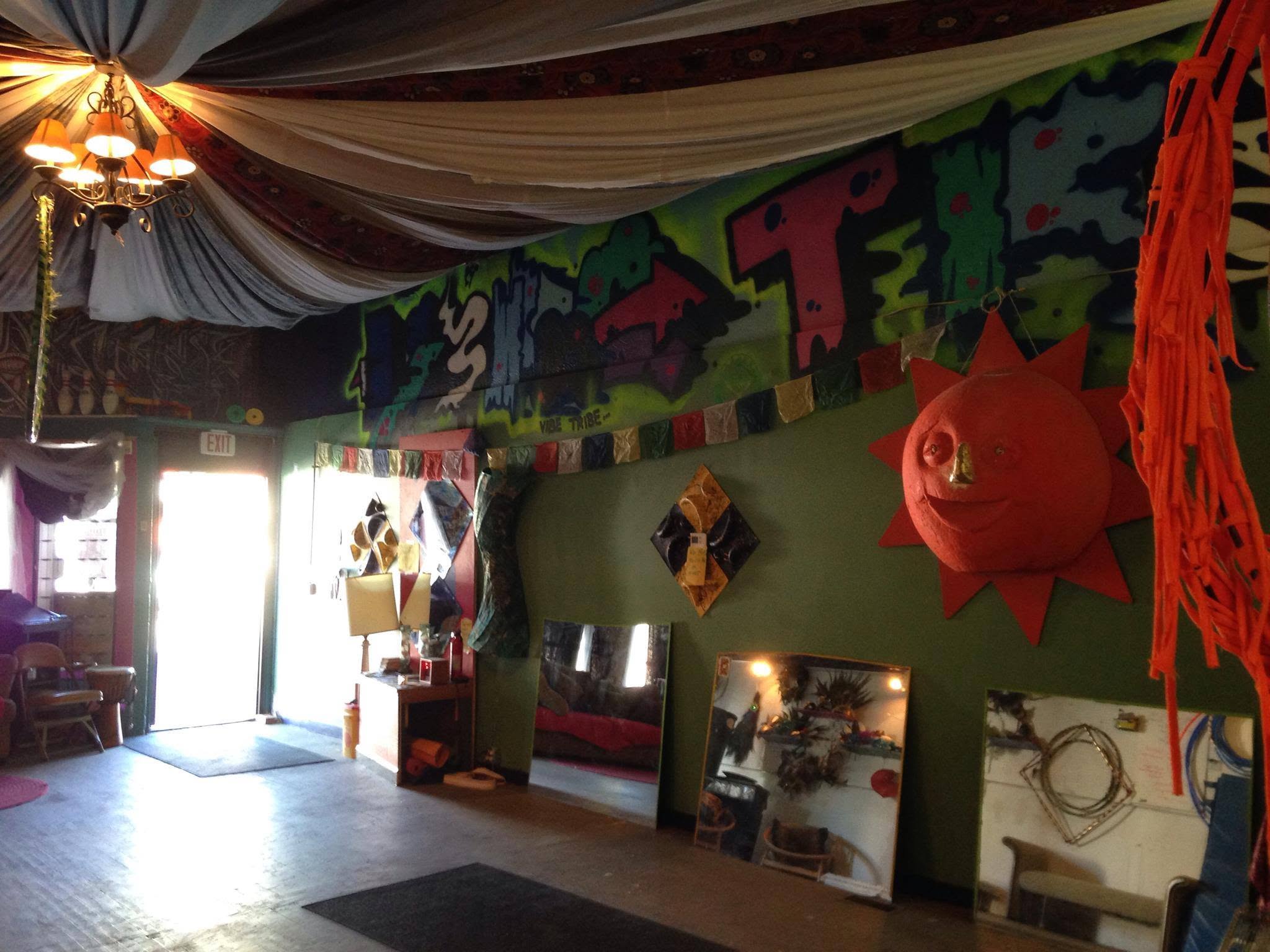
Well, Yosh’s Loft in the West Bottomes technically did it first and better, but around 2011, The VibeTribe KC emerged as something ambitious: not just a jam group—but a multidisciplinary artist collective full of: Fire spinners, Hoopers, Poets, DJs, Belly dancers, MCs, Painters, Performance artists, Costume designers.
MissConeption got a phone call asking “how many performance artists can you bring to Kansrockas?” which was a new arts festival at the Kansas Racetrack Speedway, with Eminem and GirlTalk headlining #swooon. She said “IDK, 60?” Then she promptly called 60 of her friends saying “hey, we got a gig! Let’s go!” From that spun running the children’s activities at Harvest Festival at Mullberry Mountain in Arkansas, Wakarusa’s bluegrass cousin festival, performing at Wakarusa and running the fire circle for several years at that festival and other regional events. VibeTribe was even given an art studio for $1 a year for two years, thanks to the generosity of arts patron and real estate man Gregg Patereson, who also owned the Uptown Arts Bar. He dumped TONS of money into the performance arts, paying VibeTribers to busk and hold signs on stilts to draw attention to a flourishing arts district in Midtown. (We were definitely not making him any money.) For a moment, at 5504 Troost, there was an actual attempt to build a permanent creative sanctuary, which offered free yoga, dance and flow workshops to the community. It was a ‘pay what you can’ dues system, where everyone involved was asked to contribute $25-50 a month to cover the overhead of water and electricity and keeping ice in the cooler on nights when we had events. (In two years we operated, not ne person ever actually paid any dues, and MissConception was stuck with the utilities and liability.) Haters mean you’re doing something right, right?
Parralelling this movement and supporting the ethos, Emerald City was a housing initiative attempting to infuse artists into houses on Troost, helping them get foreclosed houses and starting a Friday night art walk. All of it folded into the fabric of chaos when people started taking advance of the perks, breaking into the art studio, leaving he water running in the bathrooms all night to run up the water bill and sabbatogue the success of the organizers. The VibeTribe was divided…. Half of the performers wanted to be professional, polished and paid well to ever leave the house. The other half wanted to give it away for free for the love on the street in jeans and sloppy t-shirts and looked like abunch of clowns who had nothing better to do but jam out with their clams out. Eventually, the organizer, MissConception, gave up and folded her cards, leaving town to escape the drama and criticism.
Spaces like the VibeTribe and Yosh’s Loft existed because people sacrificed for them. Landlords forgave rent because they wanted to see art in the city. Volunteers cleaned bathrooms for the love. People organized endless unpaid rehearsals for a shot at guest list opportunities because the promoters believed in the performing arts and knew we didn’t have any money, but we all wanted to support the music!
Nobody ever had any money, and when we did, when it was spit, there wasn’t much to go around per pearson. Guests lists and exposure, that was the most valuable currency. Oh, and we had a TON of fun. “One tribe, one vibe!” But small towns have loose lips.
KC Fringe Changed the Question
Then KC Fringe arrived and changed everything. Because suddenly, flow artists had to answer: “What are you actually saying?”
Not: “How many tosses can you do?” Not: “How cool is your dragon staff?” But: “What is the meaning of this performance?”
That’s when flow arts in Kansas City began evolving into:
Theater
Spoken word
Immersive art
Interdisciplinary storytelling
Political expression
Ritual
Movement poetry
Groups like Vibe Tribe and Vesuvius helped push that transition publicly. Flow arts stopped being merely a spectacle. It became art.
Don’t forget about the Hoop Mammas!
The Hoop Mamas are one of the most influential hoop dance and flow arts businesses to emerge from Lawrence, Kansas, and they played a significant role in the growth of modern hoop culture throughout the Midwest and beyond. Founded in Lawrence in the late 2000s, Ali MacAuley head Hoop Mama started a handmade hula hoop company and quickly grew alongside the explosion of the flow arts movement that was happening at festivals such as Wakarusa, Burning Man, Electric Forest, and countless regional gatherings. The company became known for producing high-quality custom dance hoops and helping introduce thousands of people to hoop dance as both an art form and a movement practice. By their own account, they have sold more than 40,000 professional hula hoops since 2008.
What made Hoop Mamas special wasn’t simply the hoops—it was the community. Lawrence in the late 2000s was a fertile breeding ground for creative culture. Hoop Mamas became part of that ecosystem, helping connect hoopers, teachers, and performers across the region. Many Midwest flow artists got their first professional hoop from Hoop Mamas or learned through workshops and community events connected to the company. The hoop mammas taught me SO many skills, and made the best hula hoops (did you know it’s supposed to go up to your belly button for the right sized hoop?)
Their success coincided with the broader transformation of hooping from a children’s toy into a recognized performance art. During this era, hoop dance evolved into a discipline that combined dance, circus arts, meditation, fitness, and creative expression. Festivals like Wakarusa helped accelerate that growth, and Lawrence became one of several unexpected hubs where the culture flourished. Now circus troupes like The Last Carnival and Rekinection crew continue to set the stage for professional performance artistry and education in the midwest.
THEN, when MissConception moved back to Kansas City after graduating from KU in 2008, she met Ziggy, Luna Breeze, and Surka Noelle, who were the most fantastic hula hoop entertainers around! They blew minds wind open, and taught everyone so many tricks! We would practice at Crosstown Station jam night, or on the Nelson lawn regularly, somebody started a performance troupe called the Wonderful Travels of Mr 9. We were gifted this weird office building hippie arts commune above the Coffee Wonk on Main street, and it was a hipppie haven! Once that dissolved and Chumsey the Clown left town (long story), all of the best performers started moving to the coast, circa 2009. MissC started getting calls. “We need fire dancers for this event” or “Do you know anybody that can teach hula hoopping to the Girl Scout camp?” so she figured out how to master the flame and started organizing as well as teaching. As the VibeTribe began to take a more central role in fire and flow, the band DumpTruck Butterlips spun off in full affect, to tour nationaly before sponteneously combusting due to emotional ‘differences’. (Another blog… another day.) But man they sure made hooping look cool!
WaterFire and Busker Festival Made It Public
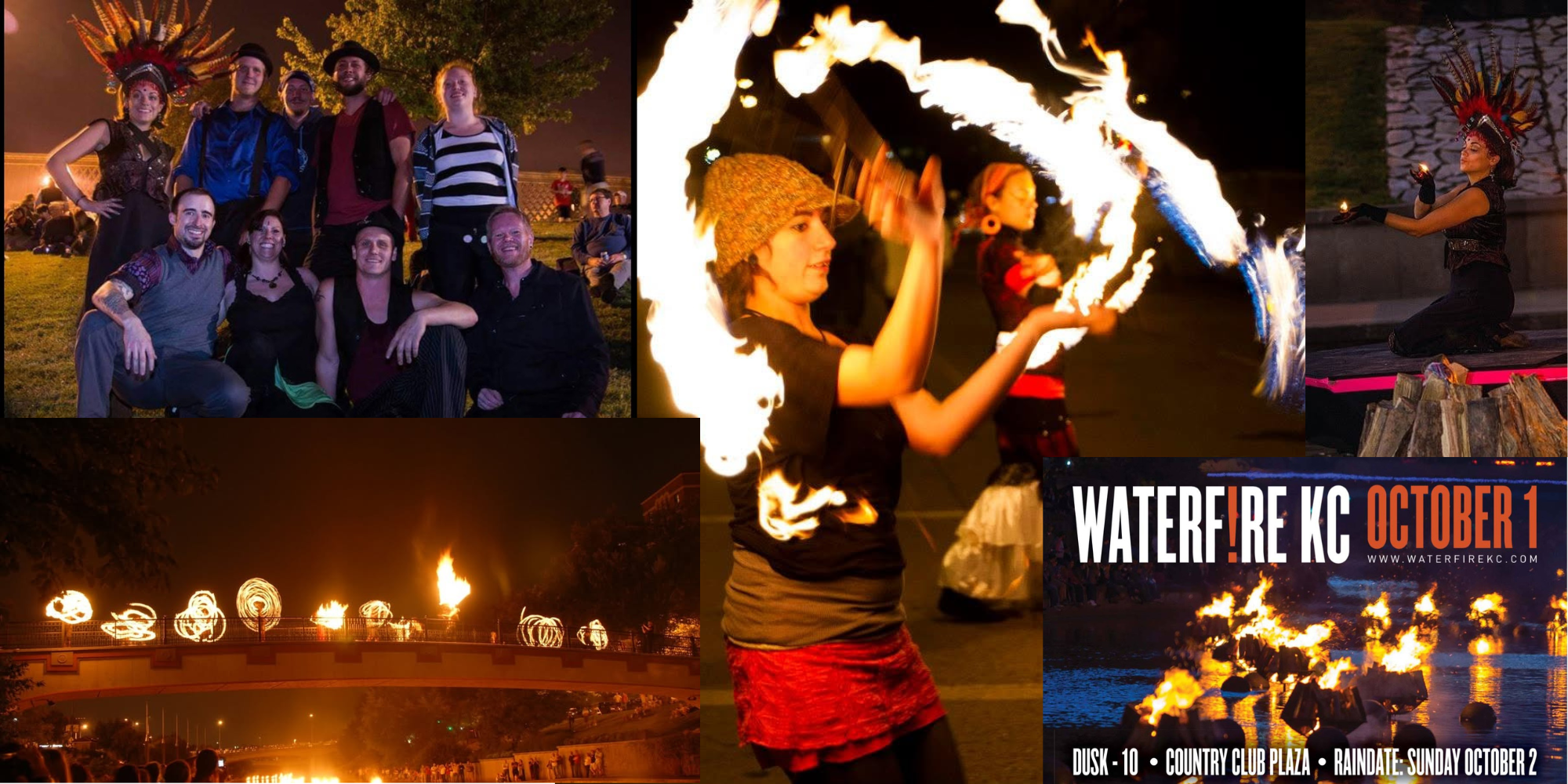
WaterFire KC was one of Kansas City’s most beloved public art events, blending fire, water, music, and community into a large-scale immersive experience along Brush Creek near the Country Club Plaza. WaterFire originated in Providence, Rhode Island, where artist Barnaby Evans created the first installation in 1994. The concept featured dozens of floating bonfires on urban waterways accompanied by music and performance, transforming public space into a communal art experience. The project became internationally known and was later adapted in several cities around the world.
In 2007, Barnaby Evans brought a custom version of WaterFire to Kansas City on Brush Creek, creating a uniquely local interpretation of the project. The event quickly became a signature fall celebration featuring floating fire braziers, live music, dance, visual art, and community gathering along the creek.
Over the years, WaterFire KC showcased a wide range of local artists, musicians, performers, and arts organizations while drawing thousands of visitors to experience Kansas City in a completely different way. We used to firedance on boats as they floated down brush creek lighting up the fires! And we were paid. It was an honor to participate, and all of the tribes came together for this epic city communion.
Like Art in the Loop, WaterFire wasn’t simply an event—it was an example of creative placemaking. It transformed public infrastructure into an artistic experience and encouraged people to see familiar spaces with fresh eyes.
For many artists, WaterFire represented:
Public art outside traditional galleries
Community participation
Cross-disciplinary collaboration
Temporary transformation of urban space
Accessibility to audiences who may not typically attend arts events
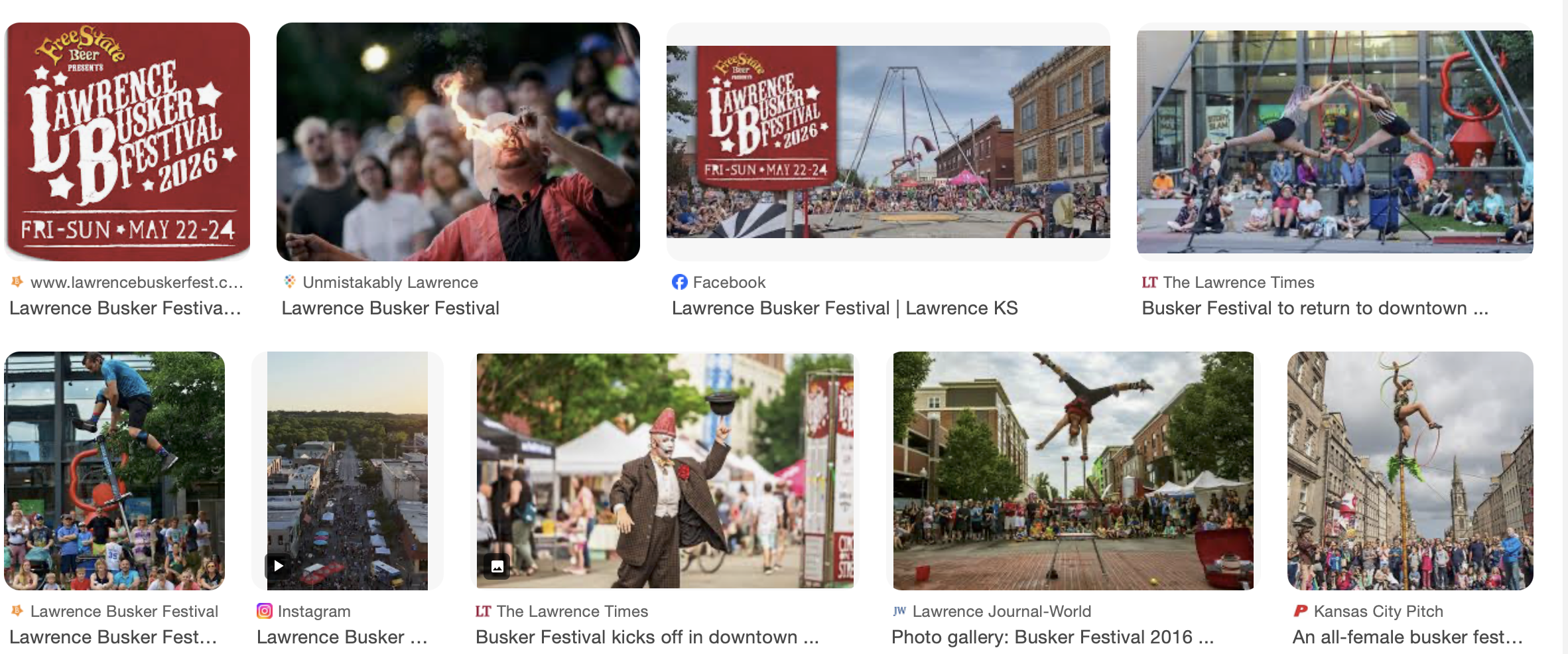
When the Lawrence Busker Festival began in 2008, making Lawrence one of only a handful of U.S. cities to host a dedicated international-style busker festival. From the beginning, it distinguished itself by including poetry and spoken word performers alongside traditional buskers such as jugglers, comedians, magicians, and circus artists.
The festival feels like a natural extension of Lawrence’s long-standing reputation as an arts, music, and counterculture hub. With its historic downtown, vibrant street life, University of Kansas influence, and history of supporting independent artists, Lawrence proved to be fertile ground for a festival built around creativity, spontaneity, and public participation.
Each year downtown Lawrence transforms into a walkable wonderland of performance “pitches” where artists perform throughout the weekend. Audiences wander from show to show discovering:
Acrobats
Fire performers
Jugglers
Musicians
Magicians
Comedians
Circus acts
Poets and spoken-word artists
Recent festivals have included dedicated areas such as Poetry Alley, the Sorcerers Circle, musicians’ stages, and performances by internationally touring buskers alongside local Kansas artists. One of the things that makes the Lawrence Busker Festival special is its relationship with Art Tougeau, Lawrence’s beloved human-powered art car parade. During Busker weekend, downtown often becomes a celebration of creativity on wheels, performance art, costumes, and community participation, creating an atmosphere that many attendees describe as part street fair, part circus, part arts festival, and part family reunion.
Today, the Lawrence Busker Festival is very much associated with Richard Renner, performance artist and clown connoisseur who serves as its director and public face. Multiple festival announcements, press releases, and community profiles identify him as the festival organizer, director, creative force, and founder, and he truly is a dream to work with. He holds space for so any local and national artists, currating the most talented street perforers and sideshow variety for this special event.
Two of the biggest honrs of my life were performing as a mermaid spinning fire palms on a boat on Brush Creek and hosting Poetry Alley at this year’s Busker Festival. Oh, and I kinda sorta got to open for the Flaming Lips one year too :D.
Who is Richard Renner?
Richard is one of those rare people whose personal biography and the Busker Festival are deeply intertwined. He is:
A longtime Lawrence-based performer.
A professional clown, juggler, physical comedian, actor, and street performer.
A graduate of the University of Kansas with a theater degree.
A student of legendary performance teachers including Marcel Marceau, Yuri Belov, and Avner the Eccentric.
Before creating the Busker Festival, he spent decades performing as a variety artist and touring entertainer. His background comes from the worlds of vaudeville, circus arts, physical comedy, mime, and street theater rather than traditional arts administration.
According to the festival’s own history, in 2008 Renner found himself unexpectedly unemployed from a long-running performance job and began looking more seriously at street performing and busker culture. That same year, Lawrence launched what would become the Lawrence Busker Festival.
In recent interviews, Renner has described the festival as a gift back to Lawrence and something that has become larger than himself. He has repeatedly emphasized the community-building aspect of the event and the way people return year after year to reconnect.
One of the things that makes Lawrence unique is that it has always welcomed poets, spoken word artists, and interactive performers alongside jugglers, fire artists, magicians, and circus acts. That’s unusual in the busker world and likely one reason the festival became such a natural home for performance artists. It truly invites performers (and audiences) to put their money where their mouth is! Busking pushed performers to work on creating that audience relationship, and taught performers something social media still cannot: how to earn attention honestly. And how to ASK for money.
The Burning Man Connection
While WaterFire predates many modern placemaking movements and is organized very differently than Burning Man, it shares several core ideas:
Art as an experience rather than an object
Temporary transformation of space
Community gathering around spectacle
Interdisciplinary collaboration
The creation of wonder in unexpected places
The difference is that Burning Man creates a temporary city in the desert, while WaterFire transforms an existing city for an evening. Both ask a similar question:
What happens when art becomes part of the environment rather than something you merely observe?
Here’s the Hard Truth
Every arts community eventually faces the same danger: Amnesia.
Young artists arrive and assume the scene has always existed exactly as they found it. They mistake inheritance for invention. And then they begin treating elders as irrelevant the moment those elders stop looking fashionable. But the reason you have:
Safe jams
Public events
Paid gigs
Circus schools
Flow festivals
Collaborative venues
& audiences willing to watch fire at all
…is because earlier generations normalized it through decades of unpaid labor and risk.
Respecting elders does not mean blind obedience. It means understanding: you are standing on architecture you did not build.
Know Your Place
“Knowing your place” does not mean: “Stay small. It means: understand your relationship to the past. Learn who came before you.
Keep asking questions (these are questions I should have asked 20 years ago when I started spinning fire and herding cats!)
Thank organizers. Volunteer to support the people who have been doing this longer than you have been alive.
Teach beginners who want to learn. Don’t be “too cool”. Run safety. Pick up trash. Credit your teachers. Stay honest.
Learn the history of the spaces you perform in. Support older artists before they disappear quietly.
Because one day you will wake up and realize: you became the elder. And the scene will only survive if someone younger chooses to remember you, too.
The Fire Is Older Than All Of Us
Kansas City flow arts was never just about spinning props. It was always about: community, ritual, improvisation, music, movement, street culture, radical creativity, and the temporary construction of belonging.
The props change. The technology evolves. The platforms rearrange. But the fire itself is older than all of us. And if you are lucky enough to carry that torch for a while, the least you can do is learn whose hands held it before yours while you pass the tourch safely.
(Don’t even get me starated on the Cowtown Ballroom music scene!)
Burn bright friends (and foes),
MissContradiction
(If you have a peice of history that is missing or you would like to add, email sara.serendip@gmail.com)
Unpopular opinion? Every generation has a boogeyman.
And now? Artificial Intelligence has become the newest punching bag. How convenient?
What fascinates me isn’t that people are skeptical. Skepticism is healthy. What fascinates me is how many people have already decided AI is evil without ever taking the time to understand it. Lord, is our species in trouble!
I would be genuinely curious to know how many of the loudest AI critics watch football, drive cars, fly on airplanes, scroll social media, stream movies, play video games, or rely on GPS to get them everywhere they go. Everything we do has an impact on the world.
Everything.
Yet somehow, AI has become the scapegoat because it is much easier than taking the time to understand the value.
The irony is that most of us have been using forms of artificial intelligence for decades. GPS navigation, recommendation algorithms, voice assistants, predictive text, fraud detection, search engines—we’ve been quietly benefiting from AI long before ChatGPT arrived at the party.
The difference now is that the technology has become visible. And visibility makes people uncomfortable.
AI Didn’t Make Me Less Creative
It Made Me More Creative.
I’m an artist! A poet. A producer. An educator. A performer.
And AI has not replaced any of those things. It has amplified them.
The songs I’ve created with AI collaboration have received some of the strongest feedback of my creative life. I made a birthday anthem for my best friend Stacy that made us both cry multiple times.
The educational programs I’ve developed with AI assistance are more polished than I ever could have imagined. I’m talking about personalized trivia games, Torah yoga, Jewish Jenga, and so much more!
No, I’m not “stealing other people’s art”! I am putting my own photography and logo and branded imagery in, letting it work it’s AI mash up magic, and coming out with more fantastic fliers and PR material than I ever dreamed of. Would I have paid another graphic desiger to do any of this? NO! I would have done it myself, and it would have looked half assed, because I’m not getting paid for most of the art I produce anyway.
Projects I have had sitting in my parking lot for 10 years are finally getting handeled and out the door. (Check out this children’s book I wrote, based on a true story about my vegetarian grandmother getting caught eating lambchops, that I never thought I’d be able to get to!
The grants, lesson plans, workshop outlines, marketing materials, event concepts, and research projects I create are more organized and comprehensive than ever before.
True story: One grant I applied for was turned down, and when I asked for feedback as to why I did not receive the funding, I was told that my application was SO polished, SO professional, and SO good, that it was lightyears ahead of everyone else who submitted, and they did not think that I was a real person who had applied. (First world problems!). I’ll call it a win, and a learning curve.
The emails I have sent to parents and target audiences have received “wow factor” feedback, with people gushing to ask “how did you write that?” and telling me “well done!”. For example, one of our students wasn’t following the dress code, which was proving to be ‘distracting’ in a professional school environment. After multiple attempts to call the student in, it was clear I needed to send an email to the parents and get clear on our policy. I spent a bunch of time researching how other faith-based organizations word this delicate predicament, again and again only to find useless verbiage stating “it is a case-by-case scenario”, and that it’s” up to each community to determine the best guidelines to uphold”. Finally I turned to AI to “write me an email to middle school parents about proper dress code for a reform synagouge” and I get more compliments on my classy email about classroom etiquette. The middle schoolers still need cat herding, but at least it is clear on our end what is expected.
Not because the machine did the work. Because I did. Yes, the machine helped. (The robots can be your friends, too!). But my brain was still involved. You can’t check out. This distinction matters.
A paintbrush doesn’t make someone a great painter. A camera doesn’t make someone a photographer. A typewriter doesn’t make someone a published writer.
And ChatGPT doesn’t make someone more creative.
Creativity still comes from people. Ideas still come from people. Vision still comes from within. The soul is still human.
So, when you hear that something is affiliated with AI, do you automatically stop listening and discredit the source? If so, you might be missing the point.
The Real Problem Isn’t AI
It’s Lazy Humans.
I hear people say: “AI is producing garbage,” and sometimes that’s true, but that is what humans do! Garbage in, garbage out. The only reason there IS garbage within AI is because a HUMAM put it there.
If you feed AI thoughtless prompts, you’ll get thoughtless results. If you don’t fact-check, edit, revise, question, or contribute your own intelligence, you’ll create mediocre work.
The problem isn’t artificial intelligence. The problem is people outsourcing their intelligence.
I use AI every day. And I spend just as much time correcting it, refining it, challenging it, and collaborating with it as I do accepting its suggestions.
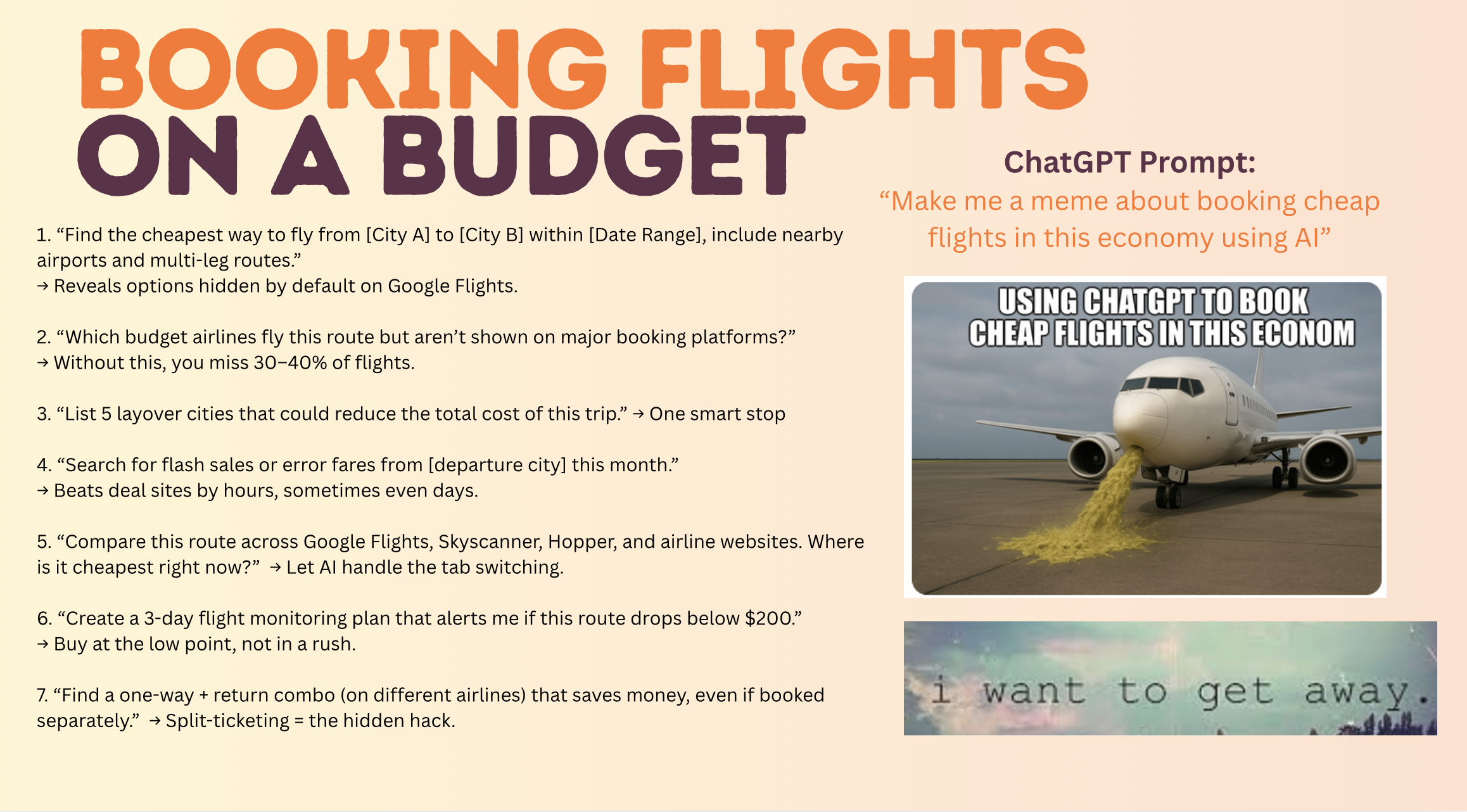
AI is not an oracle. It’s not a replacement for critical thinking. It’s not a doctor, and it’s not your therapist. It’s a brainstorming partner. A research assistant. A creative collaborator. It can facilitate a conversation with your doctor to ensure that you are getting proper medical answers and attention that you deserve. It can help you book flights and find the best pricing with the most direct route, cutting out all the bullshit (no advertisements in AI researching!)
It is a mirror that often reflects the quality of what you bring to it. So take a look at that reflection folks, and if you don’t like what you see, then maybe it’s time to get back to the gym.
“OY! It’s Taking Our Jobs”
So let’s talk about that elephant in the room.
People often say, “AI is taking our jobs.” Quite the contrary, actually. (You were going to lose your job you didn’t want to work anyway!)
What’s happening is that people who understand how to use AI effectively are becoming more productive than people who refuse to learn it. That is who is taking your job. Someone who knows how to work with the robots.
The same thing happened with computers. The internet. Social media. Digital design tools.
Technology changes the job market. That is nothing new.
The question isn’t whether AI has a purpose. The question is whether we’re willing to learn how to use it responsibly. Because the longer we refuse to engage with it, the harder it will become to catch up. And you didn’t miss the boat yet, there is still time for you, but you have to do. your homework, and not remain passively critical. You’re biting yourself in the ass.
The Ethics Still Matter
This is where the conversation gets interesting. Because I don’t believe every use of AI is ethical. Far from it.
We should be discussing: Transparency. Privacy. Bias. Misinformation. Deepfakes. Plagiarism. Consent. Environmental impact.
Those conversations are important. In my workshops and talks about using this new technology, I talk extensively about ethical AI use, especially when it comes to talking to our children about it (because just like with sex and drugs, if you DON’T teach them, they are going to learn about it somewhere. How much do you want to control that narrative?”
Fact-check everything. Protect your private information. Don’t use AI to cheat. Don’t use AI to impersonate people. Don’t use AI to spread misinformation. Don’t use AI to replace your humanity.
Use it to enhance it. Technology reflects the values of the people using it. Always has. Always will.
What About Our Children?
As an educator, I believe one of the biggest mistakes we could make is pretending AI doesn’t exist. Many schools and organizations are trying to ban it. I can sure empathize and understand the instinct. Everyone is afraid of what they do not understand. But history suggests prohibition rarely teaches wisdom or has been effective. Instead, we should be teaching students:
How to verify information. How to recognize bias. How to write better prompts. How to be HONEST. How to think critically. How to collaborate with technology without becoming dependent upon it.
The future belongs to people who can think for themselves. AI doesn’t change that. If anything, it makes thinking even more important.
Don’t Let it Replace Human Judgement!
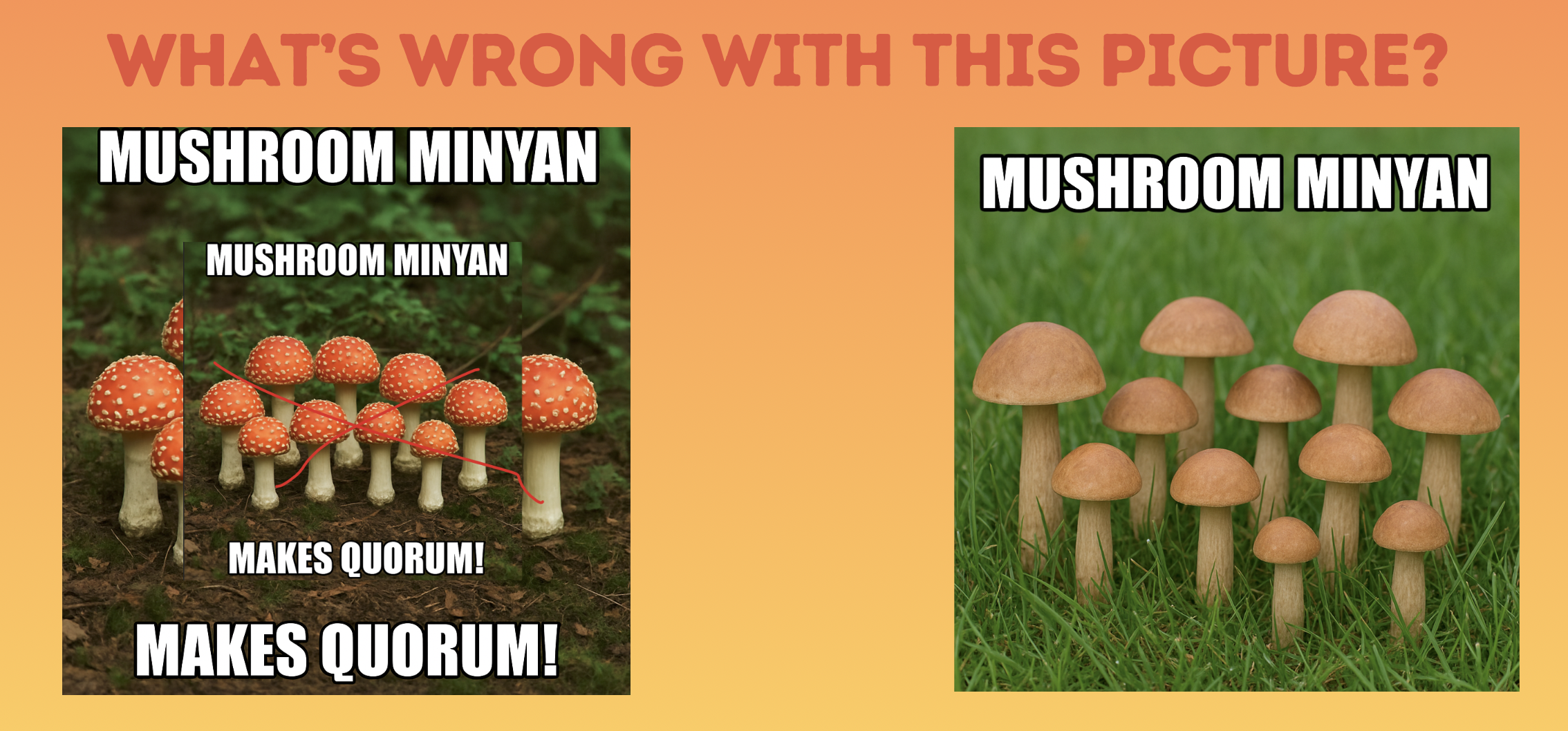
One of my favorite examples of why AI should NOT replace human judgment happened when I asked it to create a meme of a Mushroom Minyan, which came after a lady came in from outside exclaiming “there was a mushroom minyan in the yard!” which was a group of ten mushrooms in the grass. By the time I went outside to take a picture of it, it had been destroyed, and I was not able to capture that imagry.
For those unfamiliar, a minyan in Judaism requires ten or more people gathered together for prayer. So I asked AI to confidently generate an adorable image of mushrooms gathered in community… except the image it created had only nine mushrooms. And I failed to count them. The entire joke depended on there being ten! (Come on, Sara!)
Another time, I used AI to help create a song for my students and was so excited about the result that I failed to fact-check it before presenting it to them. Within minutes, the kids started raising their hands and pointing out inaccuracies. Instead of pretending the technology was perfect, I turned it into a teachable moment. We discussed why AI gets things wrong, how important it is to verify information, and then we worked together to correct the lyrics. Ironically, the mistake became more valuable than if the song had been perfect in the first place.
AI isn’t failing when it makes mistakes—that’s expected. The failure happens when humans stop thinking critically and assume the machine is always right. The goal isn’t to let AI do our thinking for us. The goal is to become better thinkers because of how we engage with it.
Don’t even get me started on the humans that are intentionally feeding AI wrong infrormation to sabotage the results. I wish I had that kind of time on my hands!
A Tool for Human Flourishing
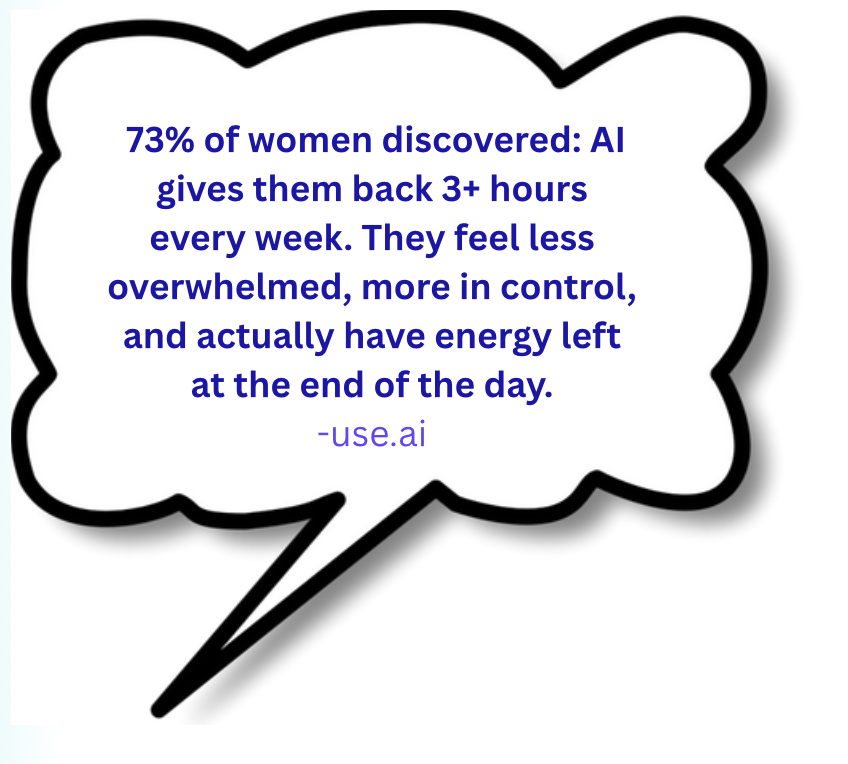
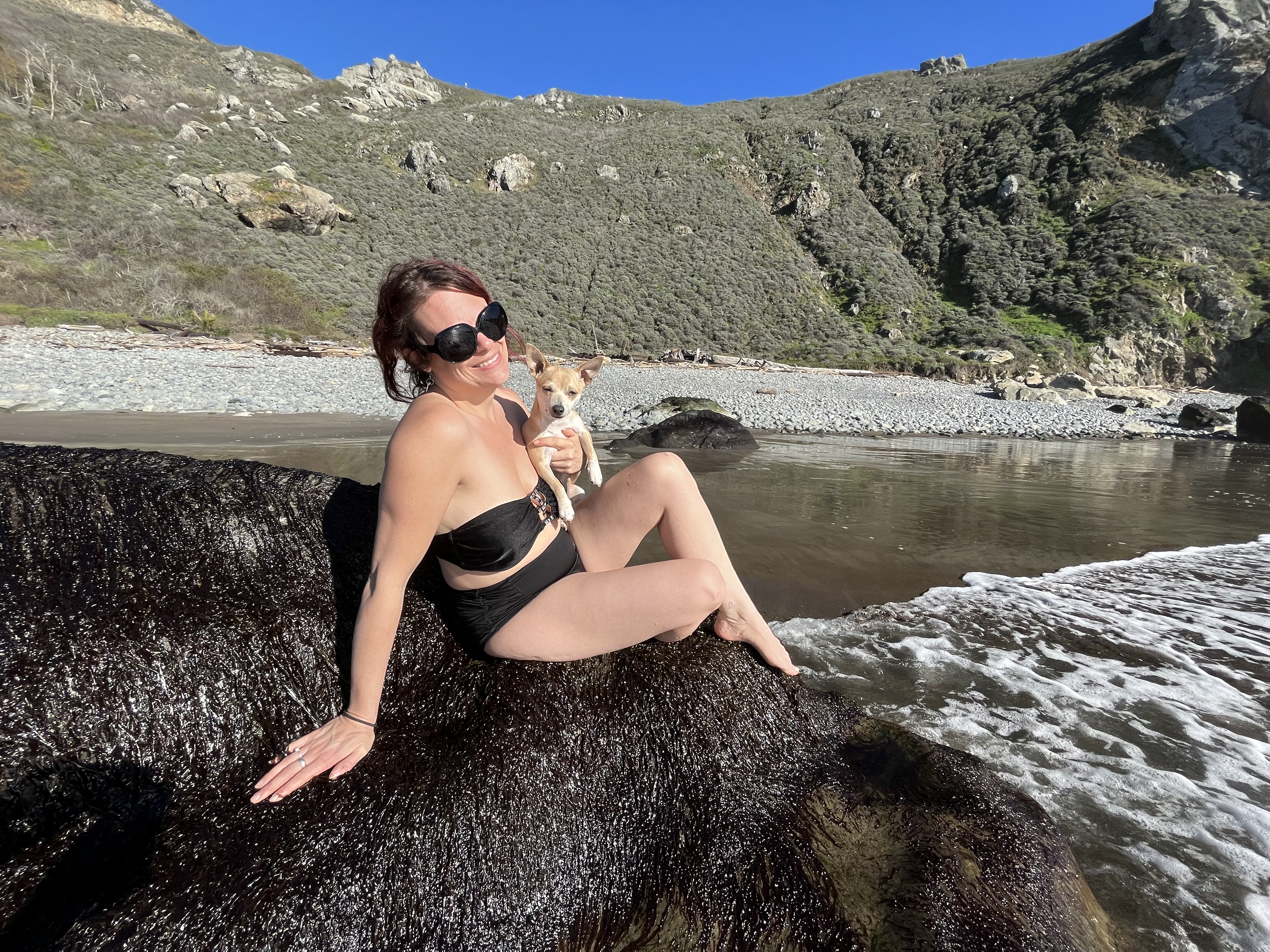
The greatest gift AI has given me isn’t productivity. It’s time. Time with family. Time with my dog. Time for self-care. Time for art. Time for ideas. Time for community. If a tool can save me hours of repetitive work and allow me to spend more energy on the people and projects I love, that feels less like a threat and more like an opportunity.
The real question isn’t: “What can AI do?” The better question is: “What can we do with the time, creativity, and possibilities it gives back to us?”
Let’s Have the Conversation
Right now there are two camps: those who If you’ve already decided AI is evil, this article probably won’t change your mind. That’s okay.
But if you’re curious…
If you’re open-minded…
If you’re interested in having a thoughtful conversation about creativity, education, ethics, productivity, and the future of human imagination… I’d love to visit your organization.
I offer engaging presentations and workshops for educators, artists, marketers, nonprofits, schools, and community organizations on how to use AI creatively, responsibly, ethically, and effectively.
No hype. No fearmongering. No techno-utopian nonsense.
Just an honest conversation about one of the most important tools of our generation.
The future is already here. The question is whether we’re willing to learn how to dance with it.
Rememeber: “The thinker hated the pen. The writer hated the brush.”
By: Sara Nicole Glass, Director of the Weiner Religious School
There is one kind that I bet all of you might actually like… A bold statement.
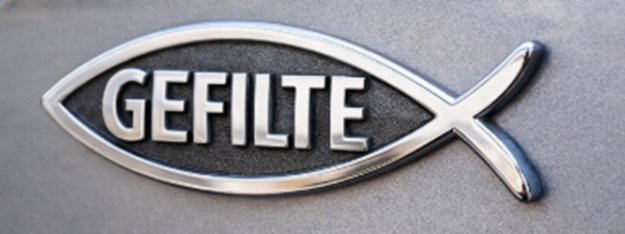
If you have ever walked through the synagogue parking lot, you may have spotted a grey fish on the back of a car with an unusual word in it. Yes, it’s a fish shape that is often associated with a Christian symbol — except this one proudly says “GEFILTE” in the middle. Yes, a gefilte fish car emblem, which ideally makes people smile. That’s right, I have not just one, but two Gefilte fish on my ride. Why? Yes, I have an agenda, and the intention is to make people who know giggle, and also maybe to allow those who don’t know to wonder.
Believe it or not, that little fish represents the very heart of who I believe we are as Jewish people, creating space for asking questions, while keeping our sense of humor.
It is a reminder that being Jewish can and should be joyful. Judaism is serious when it needs to be, but also can be playful, funny and full of cultural zest. I saw this particular silver gefilte fish emblem years ago at a store [It’s a Beautiful Day – 3th and Broadawy”in MidtownKansas City and had to have one. There has been one hanging on my car (almost) ever s) nce. Ironically, the only time it was stolen was when I was at a Shabbat dinner event last year. So of course, I found a new, slightly different version, after which I found the original one (which I could not locate anywhere for about six months), and frankly I liked the silver simpler one better, probably because while gefilte fish is uniquely part of our collective Jewish identity (or so it seams, around Passover), this little symbol also speaks to so many other people for what they need it to mean.
For me personally, it symbolizes the way we live: rooted in Jewish identity while at home in a multicultural world. While I was raised Jewish, my grandmother was Catholic, so I’ve always been exposed to different faiths, even though I identified as Jewish. I was taught that there are many different ways to identify, and that is okay. That silver fish has become a well-known symbol, but creating a Jewish twist on it, I’d like to think, is something quintessentially Jewish — acknowledging our neighbors’ traditions while joyfully contributing our own voice and humor. My gefilte fish isn’t mocking anyone; it’s simply joining the conversation with a bit of chutzpah.
Also, it highlights the idea that humor is part of our theology. Judaism adapts, evolves and meets us in our everyday lives — even in the parking lot at the grocery store. A silly little fish with the word “gefilte” inside has become a playful theological lesson: Judaism is alive and on the move!
I love that it serves as a conversation starter about Jewish identity. People ask: “Wait, does that say… gefilte?” Then we get to talk about Judaism — not the formal, textbook version, but the lived version filled with food, stories, music, culture, humor and community. In those small encounters, the gefilte fish becomes a tiny ambassador for joyful Jewish life.
I’d like to think I’m driving around, trailing many of the core values of Reform Judaism: joy, openness, cultural pride, pluralism and the belief that Jewish identity should be lived out loud and without fear. It’s Judaism that is confident but not exclusive, grounded but not rigid, proud and always welcoming. That’s what we teach our children, model for our teens and practice as a community.
So what does the gefilte fish on my car really mean? It means I believe in a Judaism that laughs, learns, evolves, welcomes and delights. It means Jewish identity is something we can carry proudly — whether on our hearts or on the back of a car. And it means that even cruising down I-435 can embody living a joyful, Jewish life.
Call it a mitzvah on wheels, but please, don’t steal my gefilte fish!
OoMy heart center, my muse. How is it that we have only been apart for a few weeks, and it feels like an eternity. You will forever always be in my mind, body and soul.
What I have learned from you! And perhaps I taught you a thing or two as well along the way. You reminded me of the importance of play and caucaphonous delight. You brought me into the frabric of a history so rich, money was never an object (except for maybe housing rent). You surrounded me with security, empowered me with confidence, and kept me protected from harm. Your serendipiteous bubble gave me the freedom to explore no uncharted territory, from your many beaches, to the Red Woods safe in the South Bay Santa Cruz Mountains, from the Castro, to the East Bay Richmond, to the Inner Richmond in San Francisco (twice!), to the nostalgic and historic grounds of the lucious Presideo, I was all over you. And you were there for it. You met me with 100% and fanned my flame. You told me “bring it on” and to “turn it up.”
My main lover. My muse. How could I leave you this way? It’s been a long road, and while half my heart may be in San Francisco forever, I had to haul ass back to the mid west on a different mission. I confess, I miss you more than expected. You will forever be my favorite lover. My soulmate. My friend. Despite the time it takes to meet again.
You were so kind to me, despite the hardships. My angels watched over me and saved me from total destruction. You inspired me in so many ways. Every event. Every art walk and concert. Every. Single. Fruit stand. Was absolutely. Next level. Mind blowing. You took it to the next level on the reg. Popping off was your MO. You set the tone for the rest of the country to follow suit 5-10 years behind your classy ass. How did I get so lucky to dedicate ten years of my life to basking in your beauty, soaking up your beached and sun rays… sleeping in on all the rainy dayz. The natural air conditioning at 55 degrees and balmy every damn day, and even your mist is to be missed.
Oh how I do miss your magic. Showing up to sold out shows and being ushered in because I looked important and was likely on the guest list or performing. “Here, you need a backstage wrist band”. Invited to after parties on rooftops I thought existed only in dreams. That bronze gate, your golden park, outside the lands with its bison and lakes stowed away, full of discovery and charm and museums outta this world. Ripe with mitochondrial historical networks embedded in the eco chamber that is also the loveable Haight Ashbery. The mission was always clear: to say yes to the sunset. Crossing a bridge meant I love you at $12 a pop and an hour of my time, it was worth it to laugh over a bottle of local alcohol free moonshine. Honey mommas united and free at lakes of merit superfluously. The stars ploughed right through my heart every night was a Friday of merit on the lake… and every morning a Monday, but still, the exhaustion was with the thrill. Still I can feel you around me, my aura now, like a field of ghosts of lovers past in my psyche, bound in love.
Until we meet again old friend, I will have you in my heart and mind forever in time. Yes, while I may court Kansas City for a few years, flirting with New York or LA, like long lost star crossed lovers who never given a chance. Timing is everything. I will always cherish the ten years we had and keep those memories/lessons sacred, holy, and dear.
I’m only a phone call or a train ride away. Don’t be a stranger, California! Call me. Come visit Kansas. You’re welcome – Anytime –
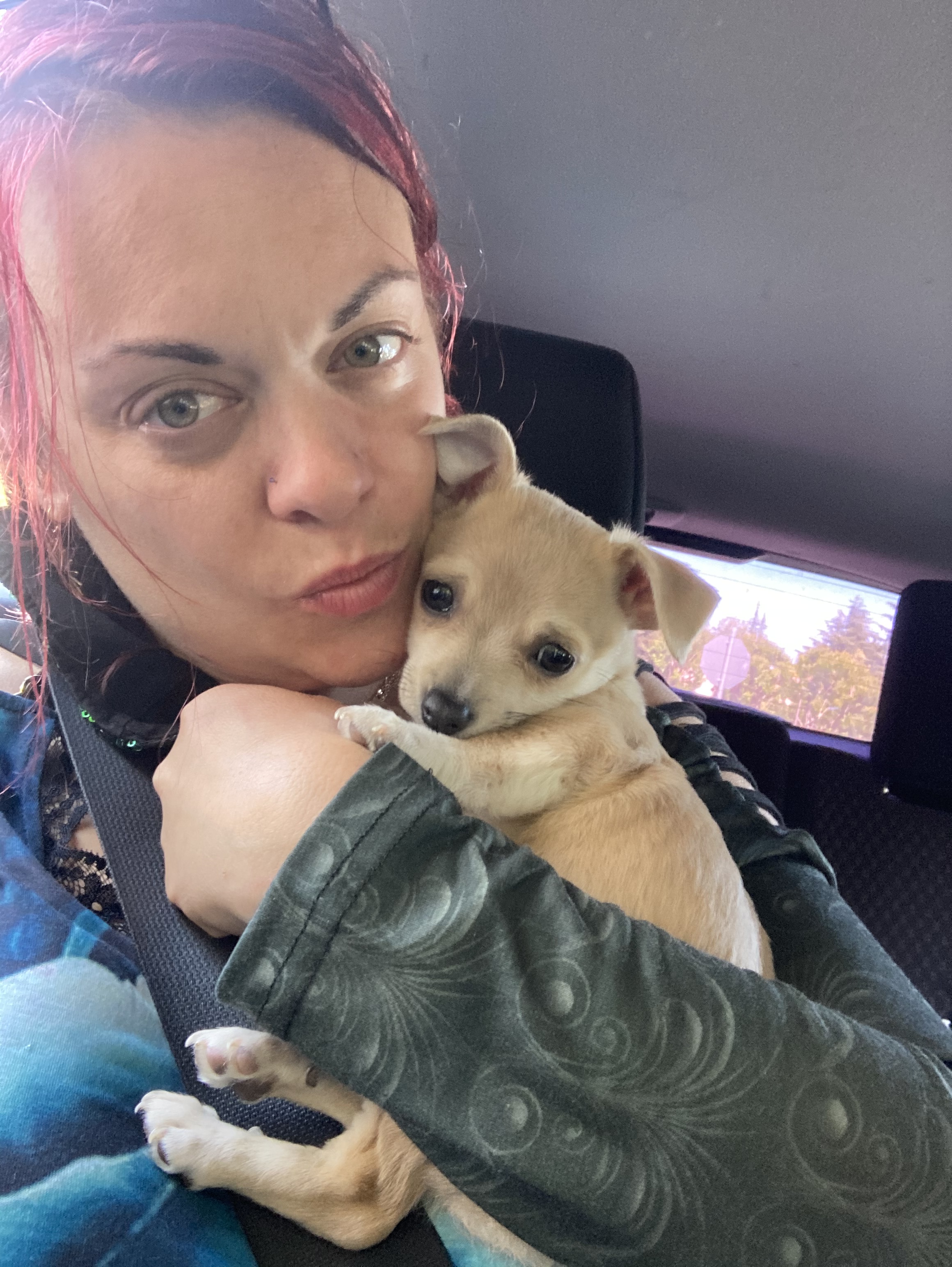
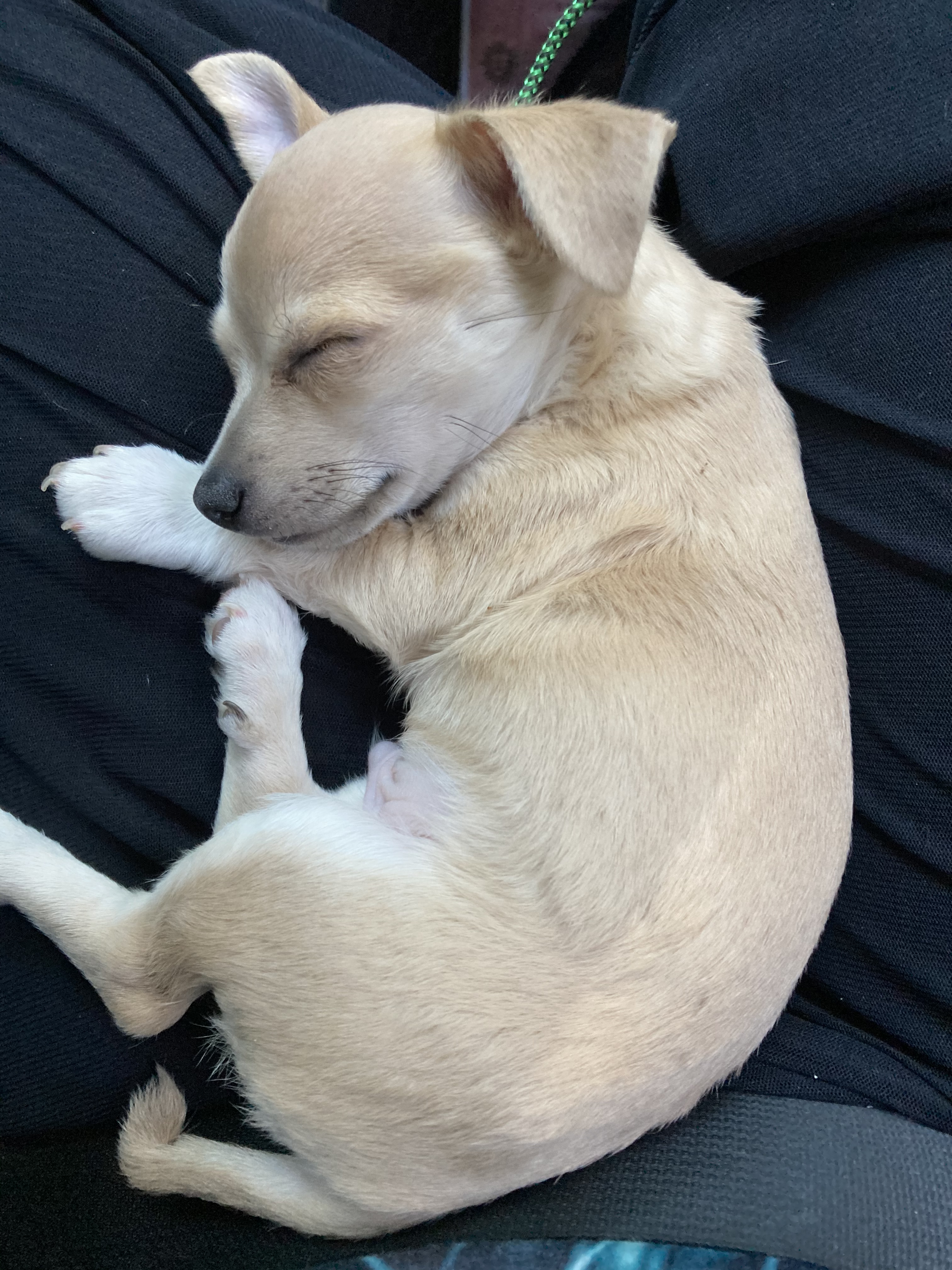
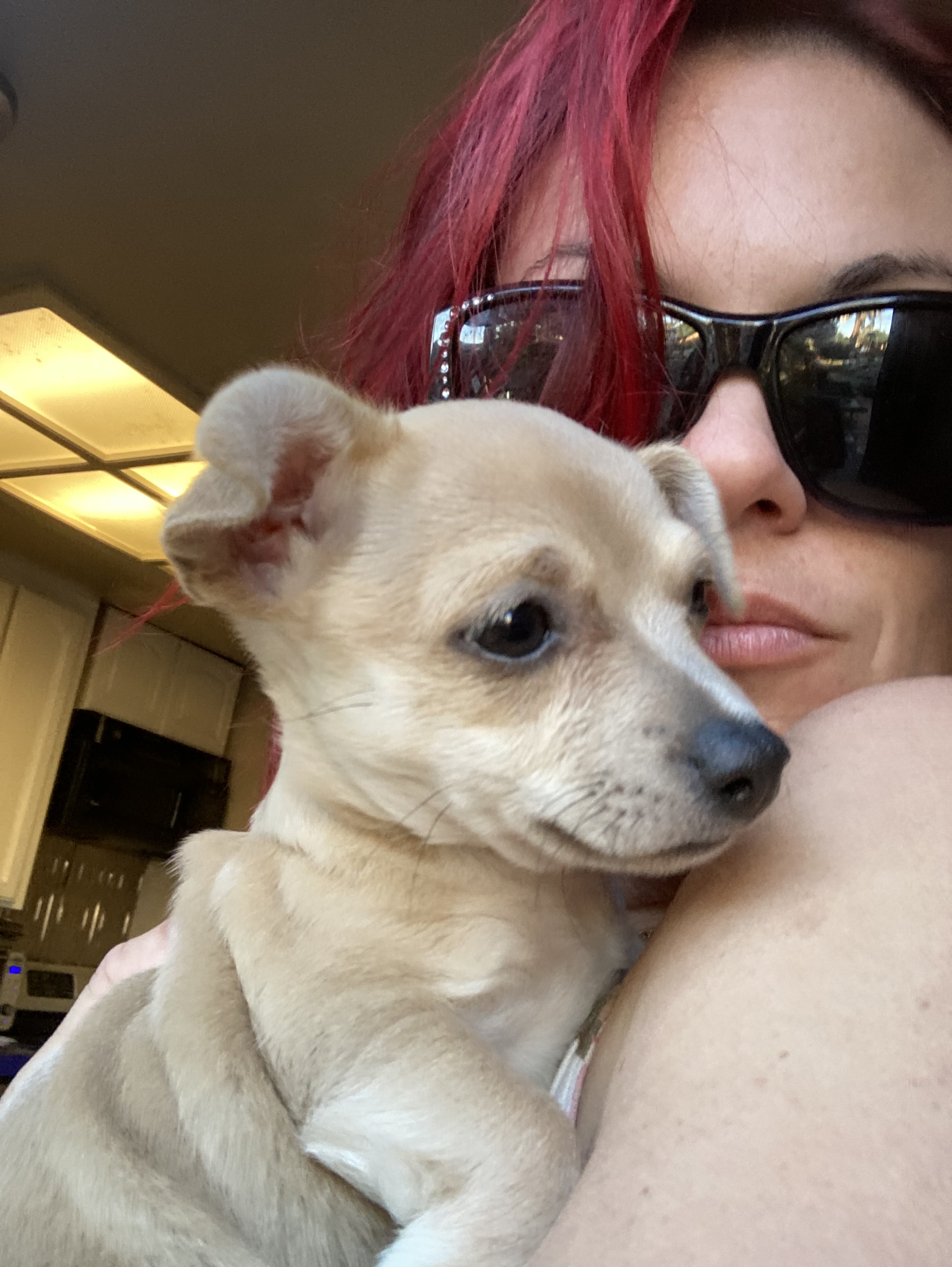
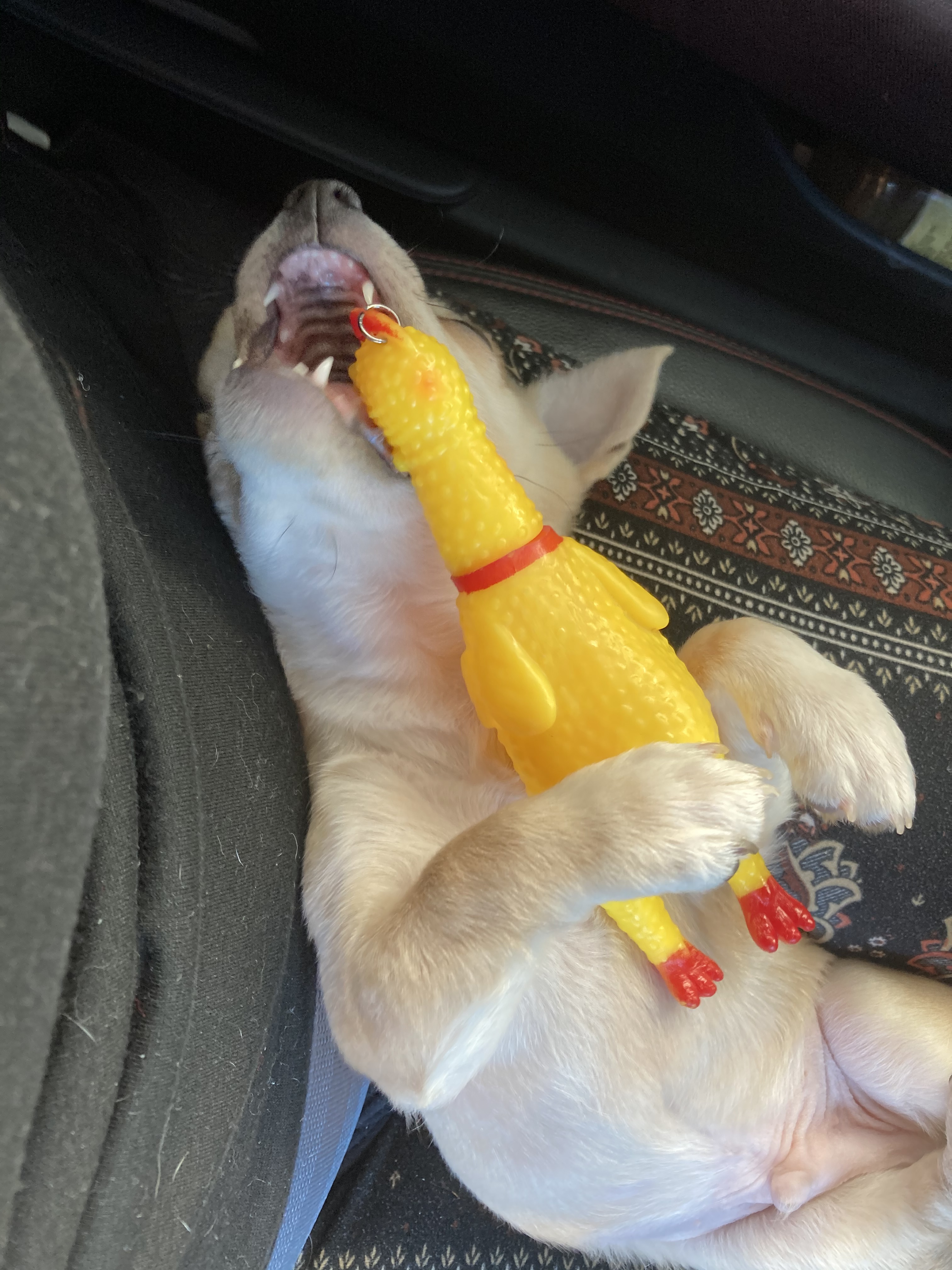
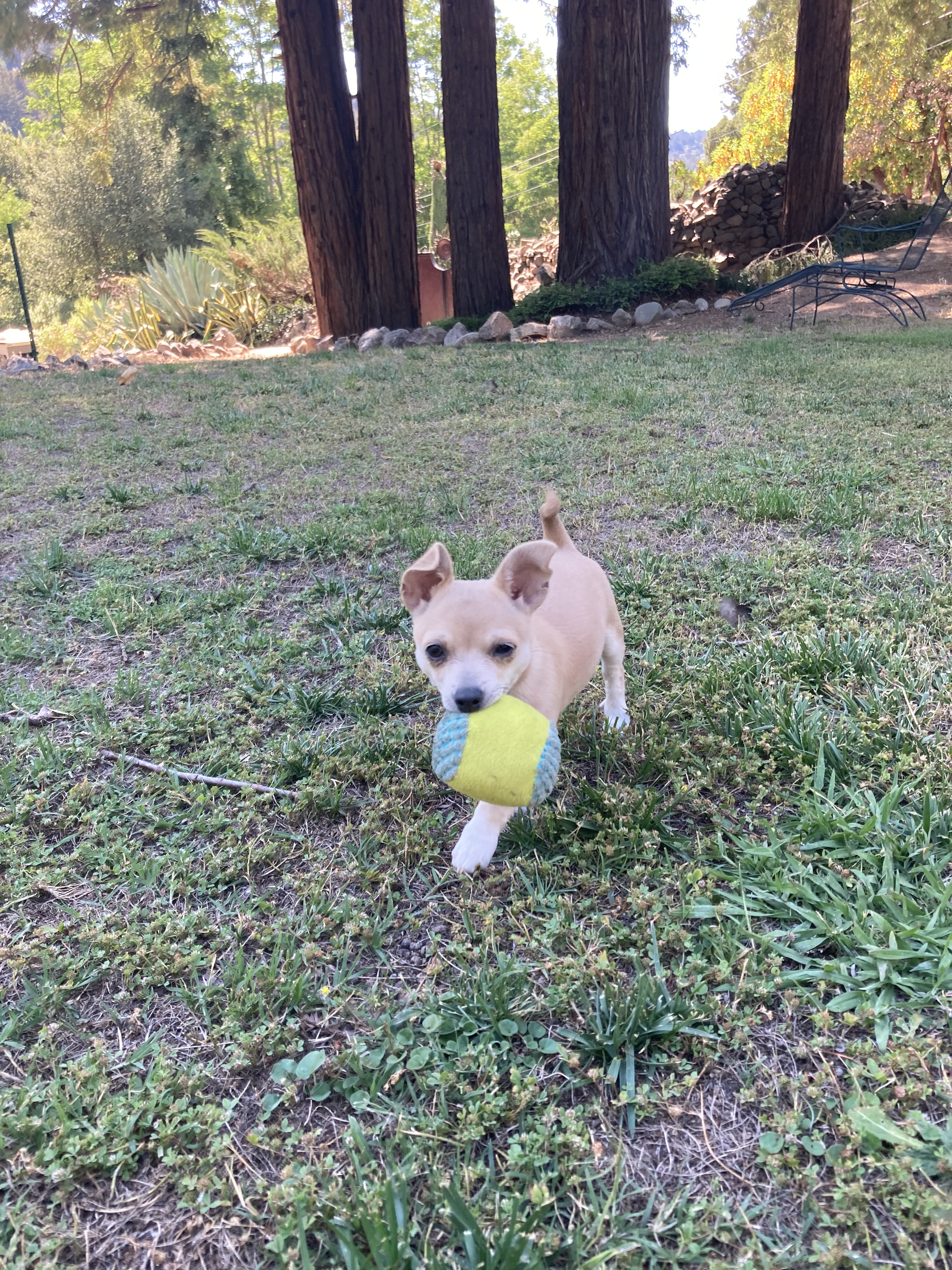
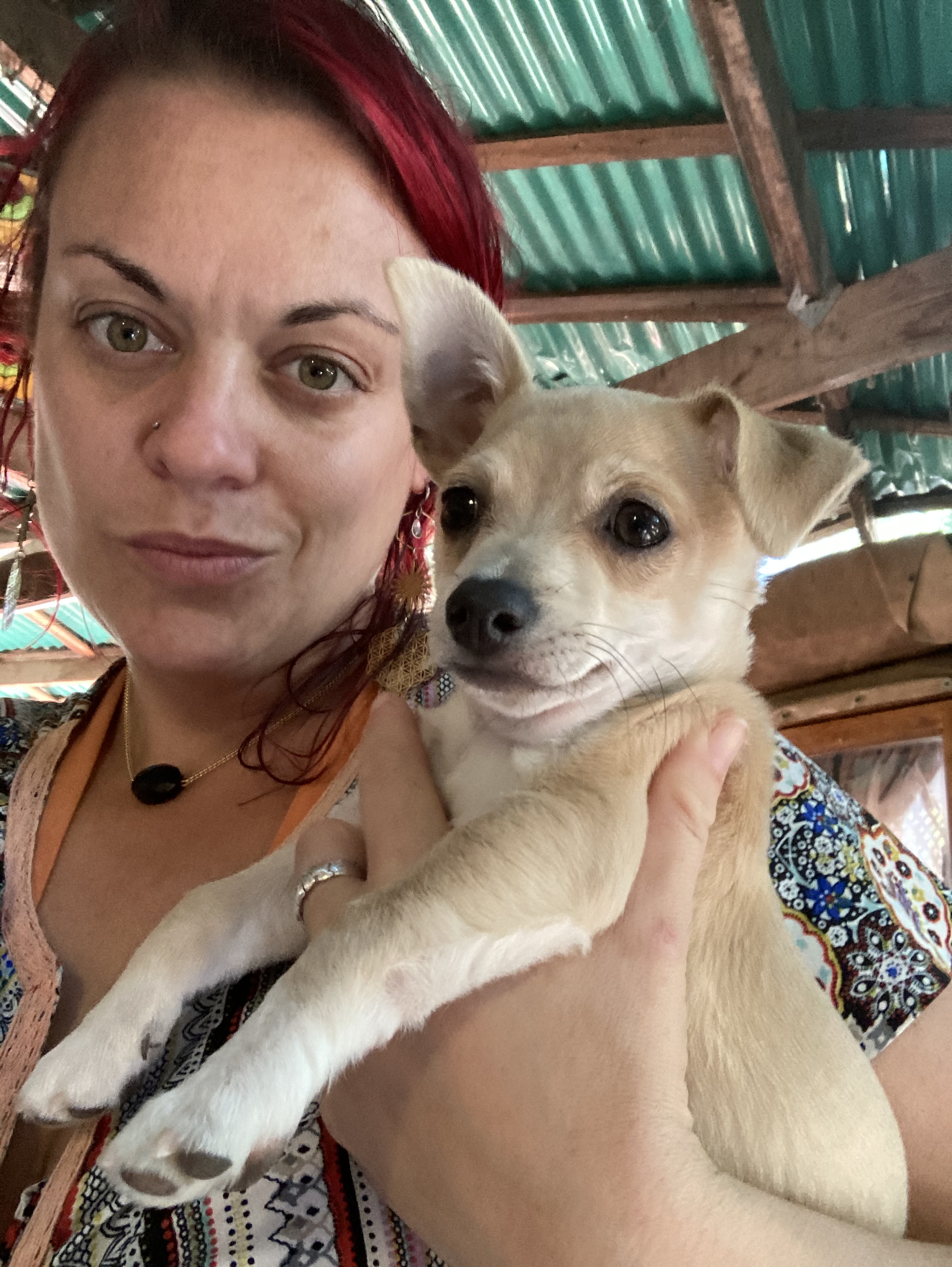
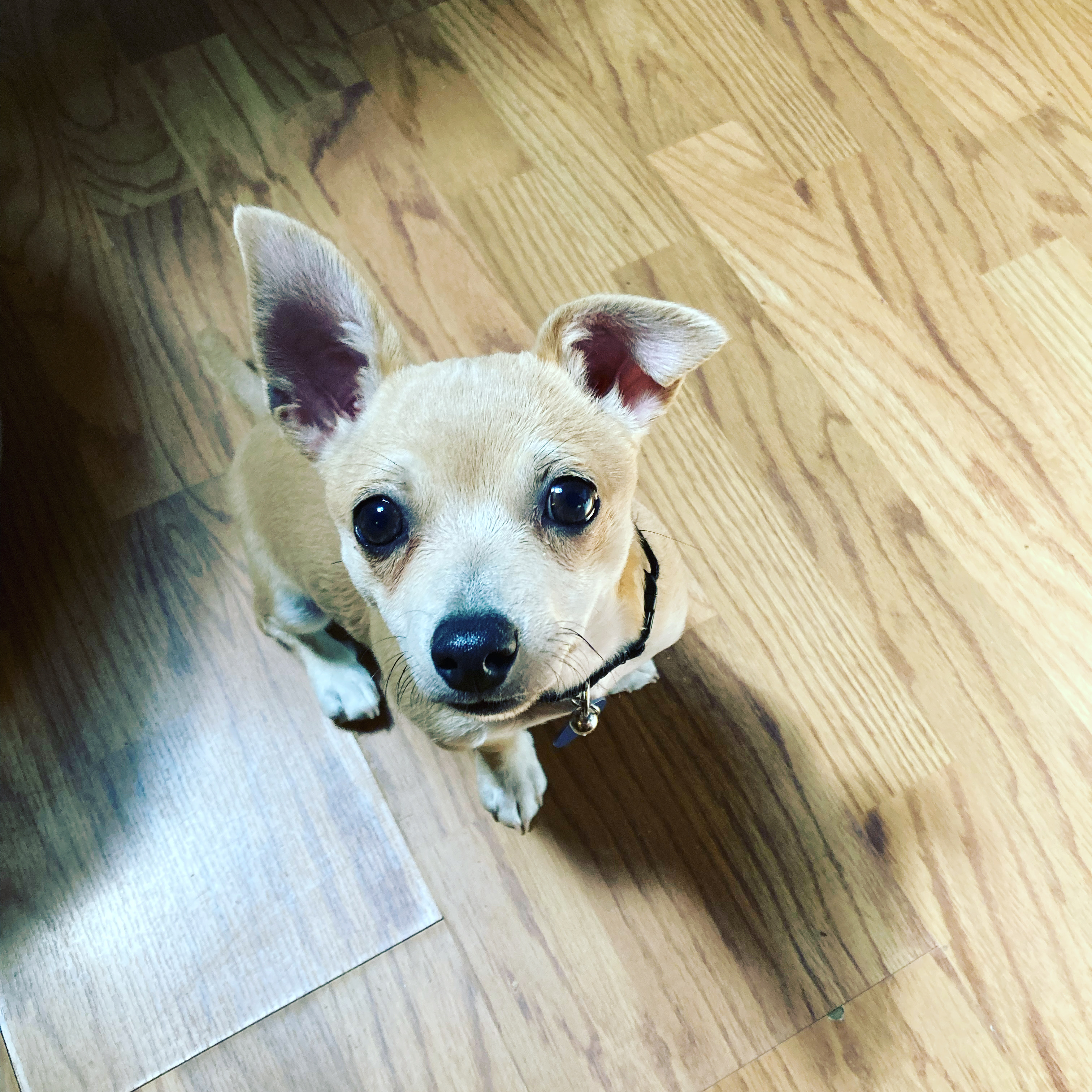
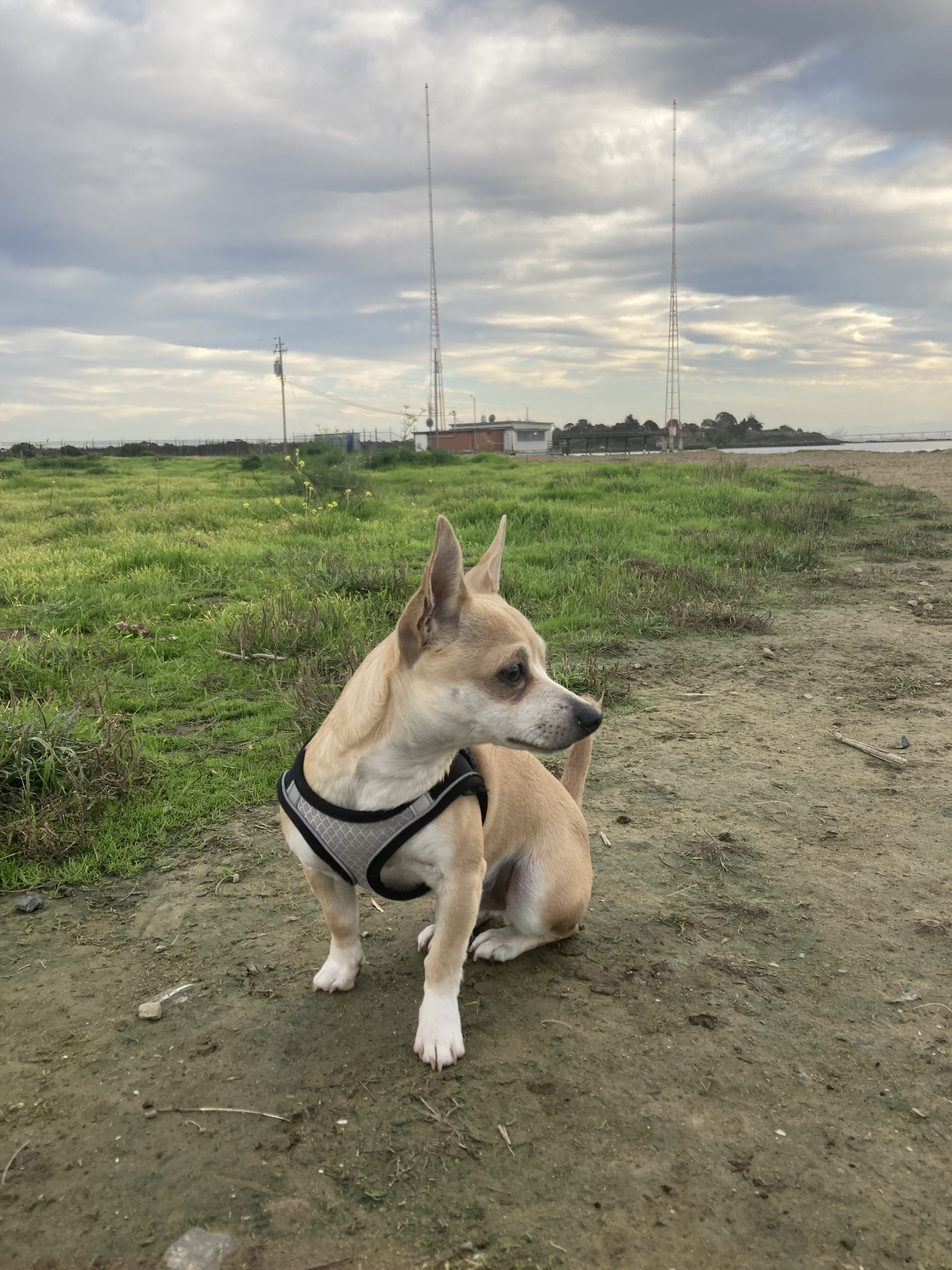
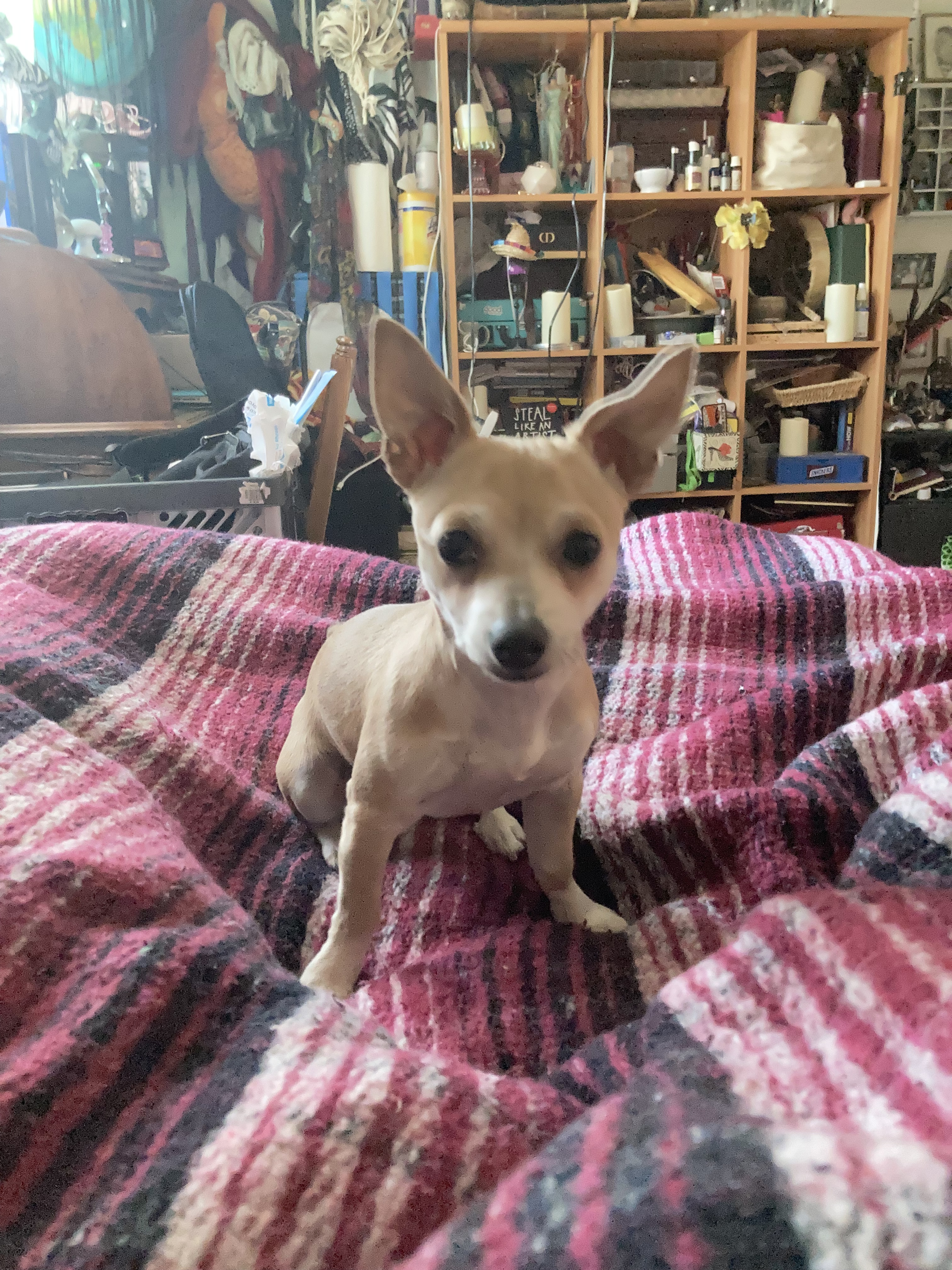
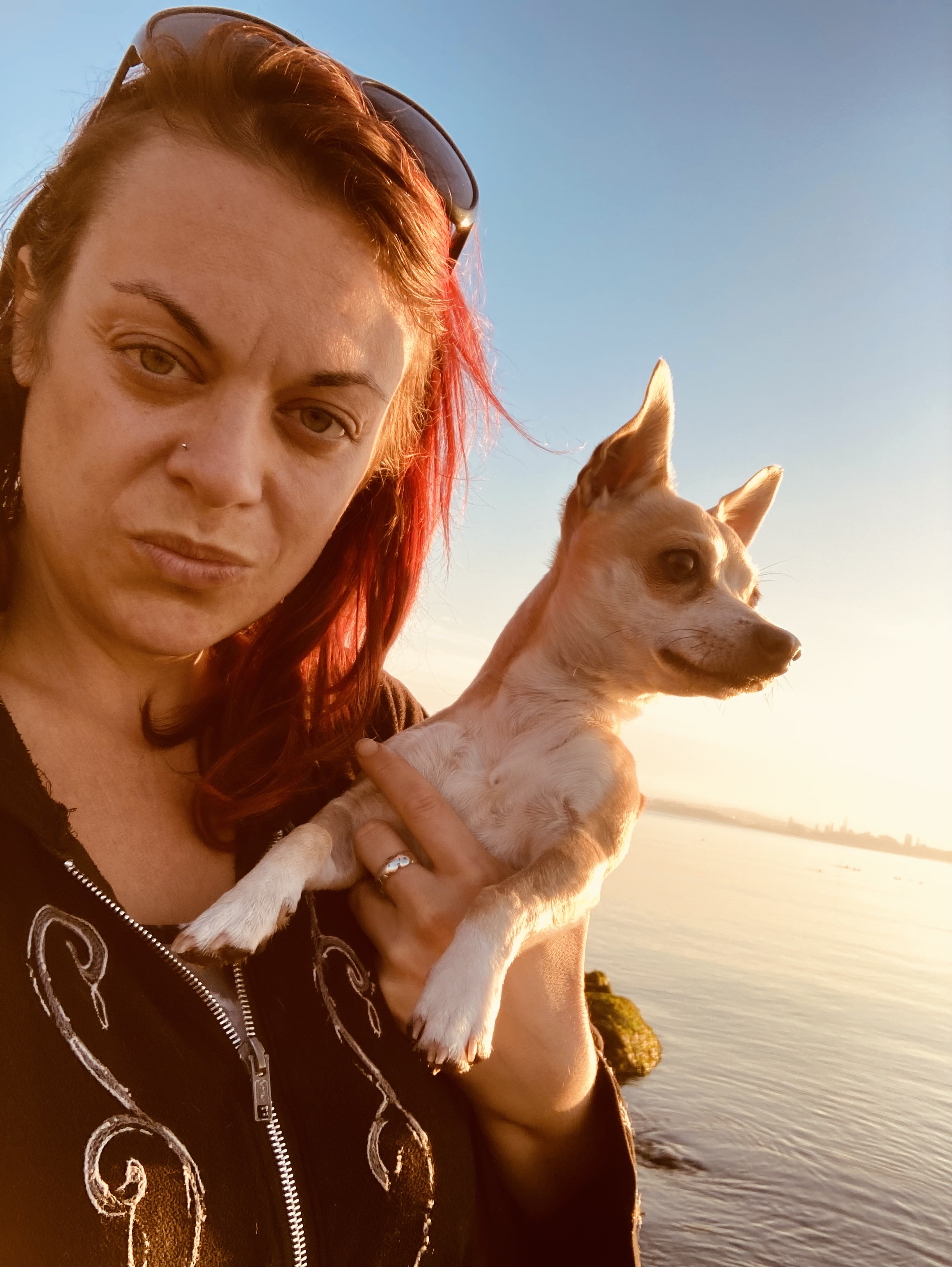
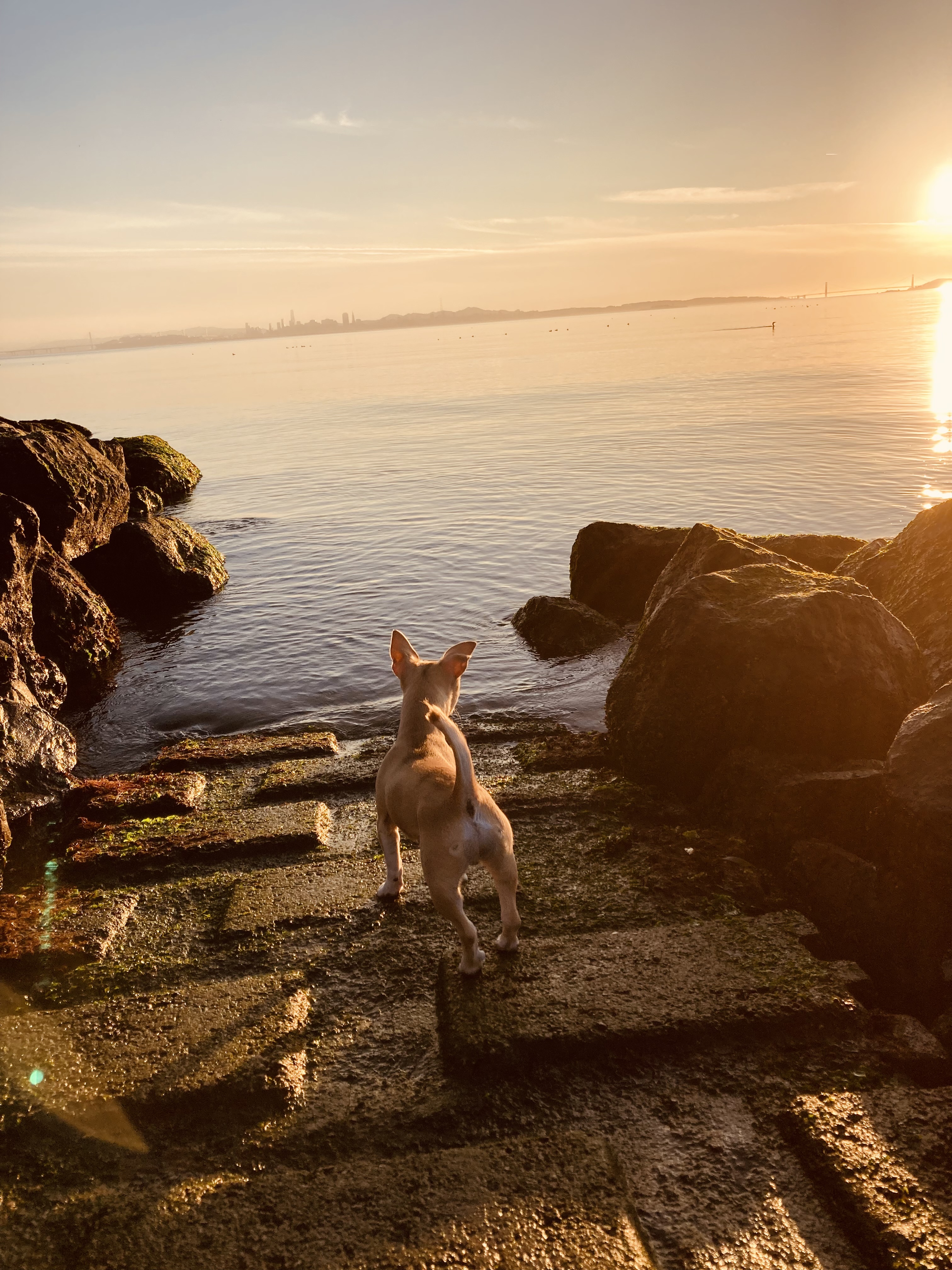
I’ve seen some crazy things in my time here on earth, but never have I seen anything come and go so wildly as my beloved canine friend Rafiki, my friend, Raef, Ren, RafMeister 4000, RifRaf, Mr Rafickles, of the many names I gave him, it’s sad to say that now he may rest in peace.
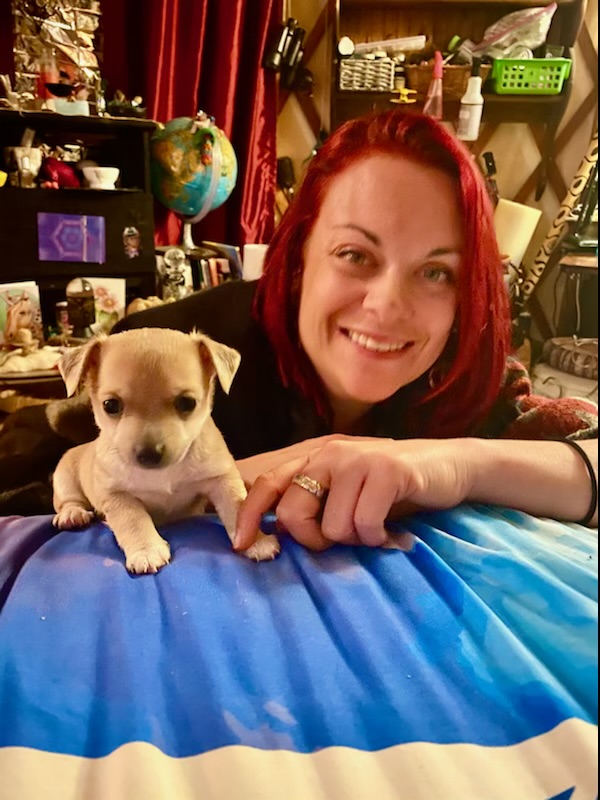
Rafiki came into my life somewhat unexpectedly, and boy was he a wild-child. A friend of mine had gotten a chihuahua and I said to them, “Oh, I so want one”! and my friend took me seriously. She said that the momma was having another litter and that I could get one on the next go around. I told her I wanted to name my dog “Bageira” after the puma from Jungle Book, and she laughed.
Well, a few months later this friend called me up and said “hey, I’m bringing your dog in a few weeks.” “Oh, dear”, I thought. There weren’t exactly dogs allowed where I lived. But I figured I’d deal with that soon enough. Then about a week later my friend called and said “Hey, the dogs came early, so I’m bringing you Rafiki next week”. “Rafiki?” I thought. Oh, snap. Rafiki was the wise manderil from The Lion King and the name meant ‘my friend’ in Swahili. So mote it be.
A week later she showed up with this little pup and the rest was history. I fell in love immediately. When my landlord called the next day and said “We know you have a dog, get rid of it”, I was presented with a choice: to move or get give him away! But at work the next day, a friend told me I could register him as a service animal online, and that way my housing unit had to by law let me keep him. I looked in the process, had some therapists of mine write some letters saying why I needed a service animal as a dog, and voila, I was allowed to keep Rafiki at my current place of residence. The fun began.
From the start, this dog was not an easy animal… he was a full-time dog, requiring constant attention and stimulation. Luckily, I was allowed to bring him to work with me, and I worked from home quite a bit, during the Pandemic, so I had the time and energy to spend with him. It was hard work, but worth it. He truly was my soulmate. After about a year and a half of having this pup, I ended up landing a new job but that new place of business was not super keen on having dogs in the office. While I could have pressed the issue, I feared it made me look unstable and I didn’t want to start off a new job that way, so I turned to dog sitters and left him home more often. As time went on, it became easier to have Rafiki stay full-time with my friend, whom he adored, and I would take him on the weekends when my friend needed a sitter. While it pained me to be away from him so, it felt like the best move for the dog’s happiness.
As things can sometimes go, me and this friend ended up having a bit of a falling out, and I was told I wasn’t going to get my dog back or be able to see him again. I was pretty devastated. After trying to get the police to help me get him back and consulting with some lawyers, I decided to take matters into my own hands and to just show up at the residence of the person who had Rafiki, and I took him back. In what ended in a not very pretty battle, I ended up getting my dog back, and was ecstatic. I was no longer working at that same job, and was able to be with him even more, and it was truly a dream. I cherished this little pup. He truly saved my life during what were some very hard times. He was my baby.
So you can imagine the horror when on the solstice, December 20, 2023, a coyote that I had seen a few times in my neighborhood, came up to our front door and Rafiki ran out after him, thinking the coyote was a dog that he wanted to play. As I chased the two down the street, franticly screaming at Rafiki to stop, and come back, alas, they were too fast for me, and I watched the coyote grab Rafiki in its mouth and run off into the woods with him. It was truly, the most horrific thing I have ever gone through.
I was in shock for several days, and it made for quite a sad Christmas, New Year and Birthday season. I thought that I knew what grief was, but I really didn’t know the level of grief thought possible until this event. I still to this day, break down into tears almost every time I drive down my street. I cannot get that image out of my head, going over the incident over and over again in my head, obsessing about what I could have done differently, and maybe he’d still be alive.
While that dog had been trying to kill himself since the day I got him, eating whatever he could possibly fit in his mouth and running out into the road every chance he got. I still loved that little bugger, and I will always cherish the blessed time we got to spend together. He truly was my best friend and my baby.
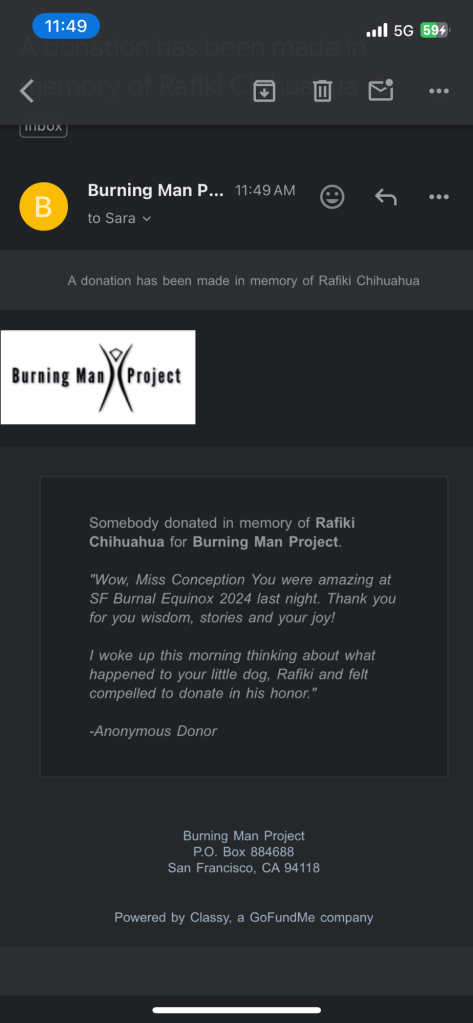
When just the other night, someone made a donation to the nonprofit I know and love and volunteer for in the name of Rafiki and my solid work in healing and in doing my art, tears came to my eyes. Though he may no longer be in this earth, he most definitely lives on in spirit.
Thank you sweet Rafiki for coming into my life; for making my life better and for always being so sweet to me. Thank you for teaching me to stop and smell the flowers, and how to play with a ball. Thank you for stealing my heart and making it whole again.
You will forever be missed and be my best friend, Rafiki. My sweetheart.
The path that led me to Burning Man is not traditional… but it did start with a Black Rock. Let me tell you a story:
You see, I was always a jam band girl from the start, not intentionally, but by fortunate accident. In high school, my friends convinced me to go to a John Mayer concert (who I’m still in love with by the way… after those Dead and Co shows, hash tag marry me John Mayer!). So we were there are the Uptown Theater, Kansas City in 2003 mostly to see the opening band, OAR, (Of A Revolution), and I that’s when I promptly fell in love with the sweet sultry chords of chaos. Their 17-minute-long Crazy Game of Poker song won me over instnatly, and from there I was off to the dance floor races. I tripped on to bigger better jam bands, including the String Cheese Incident, The Grateful Dead (I know, I know), and eventually I was turned on to the best band out there in the world, PHISH. (DUH!) Us Phish lovers are sort of like a cult, where once you go Phish, you can’t help but tell everybody how amazing they are… kind of like vegans, but with style. Oh, but I digress…
Anywho, it was this jam band festival scene that I rocked for over a decade, that took me to places and back-stages I never could have imagined. It was THIS scene that led me to Burning Man, at the pressings of my Wakarusa festival director (and we know, Burning Man isn’t a festival if you ask any Burner, but it’s a sure hard left from one, and I was all in.)
Burning Man resides in the middle of the Nevada Black Rock Desert, and while it’s a pain in the ass to get to, it’s surely one of the mightiest places on earth. I keep going back, even when I don’t want to. I love that black rock.
Come to discover, my favorite jam band from my past, OAR, coincidentally has a little song called Black Rock.
“Well the black rock, is where I spend my time, writing a mystery and writing a rhyme…. oh the black rock”
Now this song, is actually one of my LEAST favorite songs that OAR has in their catalog, but when I discovered the song, I messaged the band and asked if it had any connection to our beloved Burning Man Black Rock City? They actually responded: “No”. Oh well… long shot. But still, serendipitous, nonetheless.
As an artist myself, I am a true lover of the mash-up… any good mash-up, making two pieces of art or music even more prolific with a good blend. As a poet and writer, my trademark is taking the song titles of famous bands or artists, and mashing their own lyrics up into a new but familiar story of glory. I have written one for Phish, one for the Beatles, one for The Dead, one for Bob Marley, and of course one for OAR:
“Hey girls and boys, if you only knew, about Mr Brown and his conquering fools. It was a crazy game of poker that started the craze, to a destination on top of the cage.
Whose chariot we follow to a black rock of soul from the city on down about an hour ago… Believe in this music, it’s the only solution, for this is the beginning of a revolution”.
-My Original OAR Tribute Poem
I even put together a poker bulresque performance to the Crazy Game of Poker, but you’d have to subscribe to my onlyfans to get that insider info 😉
Another favorite tribute I have is to all pop music that I wrote by looking at my iTunes years ago and pulling out all the band names that had double entendres. For example:
“Mammas and poppas of this three-dog night, it’s almost early November and my third eye has gone blind…” You can listen to the song on spotify: https://spotify.link/hxqM0HeujCb
Well, many years ago, I was fortunate enough to meet OAR and actually got to spit them my OAR poem and Rock ’n Roll tribute. How badass right?!
A little while after that, I heard a new OAR song, that felt like my concept, them mashing up all these bands and song titles into a song they call “Favorite Song”.
Hmmmm…. I guess I’m flattered! Maybe it was my influence, maybe it was the times… who know?
You never know where this great mash-up world is going to take you.
Now, when someone asks “how do I know what my burner name is” I tell them to start with their AOL screen name they used when they were younger. That can tell you a lot about a person. Me? My first handle was ‘HeyGirl16″. My favorite OAR song is still “Hey Girl”
This girl has come a long way since her OAR fan girl days, but the music still speaks to me, and has had so much influence over my own artistry today! Thank you OAR, Black Rock City, and to all of those who have supported my art and music over the years.
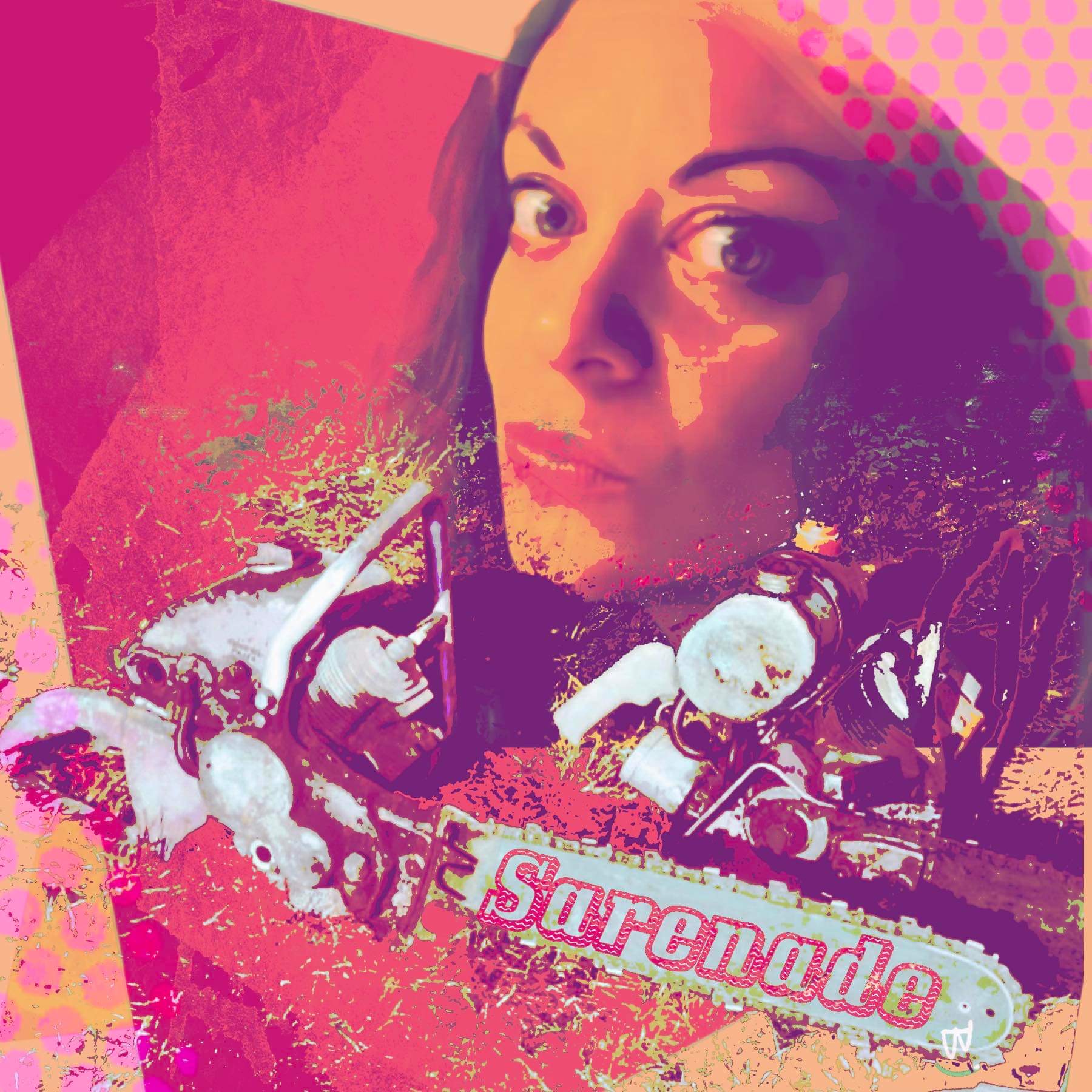
Coming out soon, I am releasing a parody album (think Weird Al) called Sarenade! Stay tuned for the drop and I can’t wait to see you on that black rock! ❤
Many of you may wonder why I or several people still continue to wear a mask, so I wanted to offer my perspective about the Art of the Mask, and why I continue to sport the mask, even though the pandemic seems to be behind us.
Wearing a mask was something that originally, I despised and resented, though after it being culturally suggested I wear it at my previous job, I came to appreciate some of the different aspects, and now it is something I often prefer when I’m in public. First of all, working in events, here at the JCCSF and also attending many social events in my spare time, I do find that after having to wear it for several years and having actually gotten COVID now at least four times, my immune system is not what it used to be. I feel very vulnerable in getting sick myself, but working many events I also feel a lot of guilt around possibly spreading germs to other people, especially older folks and people with a high risk. Wearing the mask protects me to an extent, but also protects others I come in contact with who may be even more at risk than myself, and I could never live with the fact of being responsible for spreading anything to others, especially my elders. I definitely take note when anybody else in the room is wearing a mask, I find it the respectful thing personally to do, reading the room, but I always make it clear that nobody else should feel obligated to do the same. It’s a personal choice I just happen to find comfort in, but to each their own!
I also find that wearing the mask usually destroys my makeup, so once I put it on once during the day, it’s not optimal when my best face isn’t on, and then I risk not looking professional, and that’s never a good call! So the mask it is.
Lastly, I am a big fan of essential oils, and I discovered a wonderful trick in putting a few drops of lavender, eucalyptus, or my favorite oil nobody has ever heard of “Ravansara” in my mask, so that not only does it smell nice, but it literally is cleaning the air I breathe. It just feels good, while not bothering other people who are sensitive to smells and would rather not get a whiff. I’m happy to show anyone my method (and let you smell the Ravansara oil, which I have a great source on) who might be interested.
I hope this provides some clarity and perspective into why sometimes I, and possibly others, choose to wear it or not wear it. Sometimes I just didn’t get around to doing my makeup. Sometimes I might not be feeling 100%, or I notice others are not feeling well and I am protecting myself, let alone them. There are lots of reasons, and I can assure you, it’s not always out of fear.
Bottom line is you do you and what makes you feel comfortable, always. Feel free to ask me questions anytime!
Confliction. I’ve been conflicted since I can remember. It’s how I got my name, MissConception. I always wanted… both. I was raised Jewish, but we celebrated Christmas, too. I was straight, but also curious. I was sweet but also craved the dark side. I want a veggie burger, add bacon, don’t be alarmed, I’m a Jew and a pagan. Controversy was something I lived for, and I relished in the fact that I could be both; break that paradigm definition regime and redefine what it means to be human. When you do that, conflict is unavoidable.
Every year around Labor Day, I run into a myriad of conflicted opportunities. Normally, during this three-day weekend of celebration and communion, I would be parading out at the Black Rock Desert in Nevada, or watching my favorite band Phish at Dicks Sporting Goods Park in Denver, Colorado, for three nights with 27,000 people. Or I could be at any other major event happening around the country right before school starts. But working in Jewish education, not to mention the High Holidays usually hit right around this time, it’s not exactly the most ideal time to take a vacation.
So, yes, I’ve been conflicted… How’s a girl supposed to go offline to commune with her family while visiting her Mecca and reset when there is SO much working to do!? And such has been most of my life. I find I’m always disappointing someone when I cannot show up for them during this sacred time of communion.
I can still feel the Jewish guilt my mother would cast my direction when I told her, “If it’s Labor Day Weekend, I’m not going to be able to make it”. The weddings I’ve missed. The gigs I’ve turned down. The trips I didn’t get to go on because of the scheduling conflicts around working school calendars and synagogue life, and I HATE letting people down.
This Labor Day, I was back in my hometown visiting family, and it was the first time in years I’ve just “chilled”. Many of my friends were at various engagements across the country, having a great time in their 2021 lives, and instead, this year I spent Labor Day weekend traveling back to California and gearing up for Rosh Hashanah.
Well, the other day my friend texted me from the Colorado Phish show, asking if I knew that the band covered the Jewish prayer “Avinu Malkeinu – and what does Avinu Malkeinu even mean?” I’ll admit, I still had to look it up to be exact.
Offhand, Avinu Malkeinu means literally “our Father, our King”. It is a declaration, an ask of forgiveness and sincerity after a sweet new year paved with intention and admission. Avinu Malkeinu is a Jewish prayer recited during Jewish services during the Ten Days of Repentance, from Rosh Hashanah through Yom Kippur. During this time, we are supposed to do a deep dive into our souls, get really real with our hearts, and ask ourselves, “Who do I need to forgive, and who do I need to ask forgiveness from? Who have I wronged? What have I done to cause harm in this world? And how can we make it right?”
Not easy questions, or answers all around, especially in a day and age when offending people left and right on Facebook is a daily occurrence. Not to mention the gender inequalities around the Avinu Malkeinu male patriarchal language… (more CONFLICTION!) but the one thing I admire most about Judaism is that there is room to evolve. We love a good argument! This is what the Mishnah and Talmud are all about… talking through the laws and customs and concepts and figuring out how they still are relevant in today’s fast-paced society. Even the rabbis were conflicted back in the day…. and still to this day, we continue to work through it and work it out.
In this day in age of confliction, as a writer, I decided to take it upon myself to write my own version of Avinu Malkeinu, and I encourage you to add your own proclamations below. I’ve asked myself: “What have we done, and what are we going to do differently?” I also changed the nouns and verbs to reflect my own experiences and conflicts. I changed who the prayer addresses and talks to, so that it’s not just God, but actually talking to each other. After all, God is everywhere and in all of us; it is a verb. I decided this year, I’m making this prayer my own.
Avinu Malkeinu
Our Father, our King, we have messed up, again and again ah-vee-noo mahl-kay-noo chah-tah-noo lih-fah-neh-chah
Our Mother, our Queen, we have let you down ah-vee-noo mahl-kay-nooayn lah-noo meh-lech eh-lah ah-tah
Oh Goddess, oh Protector, we beg of you to show kindness as the face of your name ah-vee-noo mahl-kay-nooahh-say ee-mah-noolih-mah-ahn shih-meh-chah
Oh Abba, our Safety, let slavery be abolished and renew our faith in each other ah-vee-noo mahl-kay-noobah-raych ah-lay-noo shah-nah toe-vah
Our Founders, Our leaders, remove evil from the harshness of your tongues ah-vee-noo mahl-kay-noobah-tail may-ahh-lay-noo kole geh-zay-rote kah-shote
Our Mothers, our Elders, mend the intentions of our enemies with compassion and friendship ah-vee-noo mahl-kay-noobah-tail mahch-shih-vote sone-ay-noo
Our Ima, oh Divine spirit of the wind, soften the blows of our foes ah-vee-noo mahl-kay-noohah-fair ahh-tzaht oy-vay-noo
My Wizards, my Lieges, wipe out all oppression and adversary from existence ah-vee-noo mahl-kay-nookah-lay kole tzahr oo-mahsh-teen may-ah-lay-noo
Our Seekers, our Teachers, gently close the mouths of adversity and bring kindness to our hearts ah-vee-noo mahl-kay-noos’tome pee-yote mahss-tee-nah-nooooh-mih-kaht-ree-gay-noo
Our Government, our Systems, remove wickedness, sickness, hunger, entrapment, and destruction from the grooves of our framework ah-vee-noo mahl-kay-nookah-lay deh-ver vih-cheh-rev vih-rah-ahv oosh-vee ooh-mahsh-cheet vih-ah-vone oosh-mahdmib-nay bih-ree-teh-chah
Our Brother, Our sister of different colors and wisdoms, keep each other safe in health and sanity, and humility ah-vee-noo mahl-kay-noomih-nah mah-gay-fah mee-nah-chah-lah-teh-chah
Our Mentors, our Muses, pardon and forgive all our flaws and faults ah-vee-noo mahl-kay-noos’lach oo-m’chahl lih-chole ah-voh-no-tay-noo
Our Ring master, our Creator, please blot out and remove our transgressions from our timeline ah-vee-noo mahl-kay-noomih-chay vih-ha-ah-vair pih-shah-ay-noovih-chah-toe-tay-noo mee-neh-gehd ay-neh-chah
Our Guiding Light, Adonais, erase all of our mistakes, but let the lessons lie ah-vee-noo mahl-kay-noomih-choke bih-rah-chah-meh-chah hah-rah-beemkole shit-ray cho-voe-tay-noo
Our Presidents and our Statesman bring us back to community in wholehearted redemption ah-vee-noo mahl-kay-noohah-chah-zee-ray-noobit-sho-vah shih-lay-mah lih-fah-neh-chah
Our Shamans, our Medicine men, send a complete healing to those who are sick, in the body, head or heart ah-vee-noo mahl-kay-nooshih-lach rih-fooh-ahh shih-lay-mahlih-choh-lay ah-meh-chah
Our Captains, our Chiefs, dissipate the evil of the convictions held against us ah-vee-noo mahl-kay-nook’rah roe-ahh gih-zahr dee-nay-noo
Our Family, our People, let God’s name be a verb, and God’s face be shown in the actions that you bring forth among humanity ah-vee-noo mahl-kay-noozahch-ray-noo bih-zee-kah-rone tove lih-fah-neh-chah
Now more than ever, we must ground ourselves down in unity and come together, despite our conflicting agendas. United, we will fall. Together, we can stand, hand in hand, and walk towards a new world.
Here’s to a New year, to showing up for yourself and your community in due time, and to embracing conflict for the better.